Connected Products
Your Device Gets You to Launch. the Connected System Decides Who Wins.
We design and engineer that system for commercial and industrial products, from device to cloud, built to stay reliable and secure long after launch.

What Sets Us Apart
Products we help build
Connected Products Across Commercial, Industrial & Consumer Markets.
The products differ, but they share demanding connectivity, security, and system requirements.
Smart Building Systems

Connected Machinery
Wearables & Personal Devices
Energy & Charging Equipment
Fleet, Transit & Asset Tracking Products

Fitness & Sport Equipment

Smart Home Devices

Remote Monitoring & Equipment
The Connected Product System
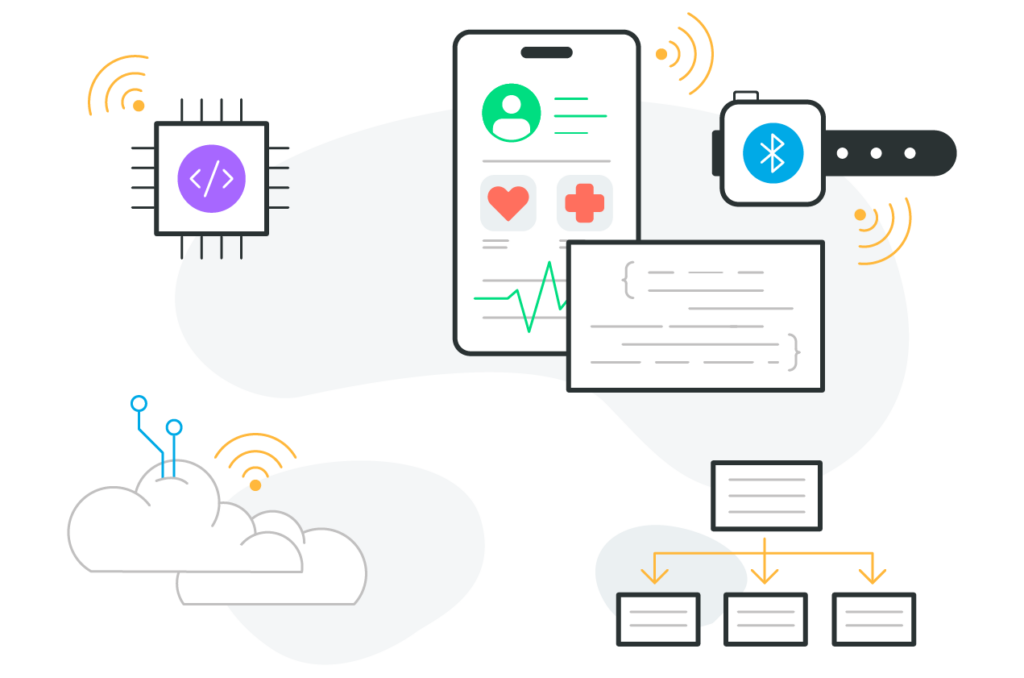
A Connected Device Is One Component of a Five-Layer System.
WHAT WE SOLVE FOR
Where Connected Products Get Hard.
These are the challenges teams bring us. Each one sits where disciplines, vendors, or teams meet.
Wireless That Holds in the Lab and Drops on Site

Security Reviewed After the Architecture Is Set

Firmware Updates That Fail Across the Installed Base
Connections That Break Across Phones and OS Versions

A Platform Inherited From Someone Else

Provisioning That Works on Ten Units and Fails on the Line
Connectivity & Security
We Spend the Rigor Where the Risk Is.

Connectivity Architecture
Wireless designed for the place the product lives.
We design the connectivity architecture around where and how the product is used, from BLE and Wi-Fi to multi-protocol designs. When conditions call for it, we build tooling to measure experience and performance in the real environment.
SECURITY ARCHITECTURE
Threat Modeling Before The Architecture Is Set.
We model how an attacker would approach the product, then design authentication, access levels, and update paths to close what the model finds. The same work decides how each device receives its identity on the production line.


Lifecycle Ownership
Designed for the life of the product.
Update systems, OS images, and fleet management are designed in from the start. Where a platform arrives half built, we assess it first, name the risks, and take ownership of what ships.
Connected Products We've Been Trusted With.
We’re drawn to hard problems, and these are a few of the connected products we’ve helped build.

The World’s First Smartphone Breathalyzer
BACtrack was the first company the FDA allowed to market breathalyzers for consumer use, and in 2013 it released the world’s first smartphone breathalyzer.
BACtrack Mobile pairs with a phone over Bluetooth, turning a breath sample into a blood alcohol estimate on the screen in the person’s hand.
That means anyone can know their number before making a decision that depends on it. It also means an accuracy people stake real decisions on has to survive a wireless link to whatever phone they happen to carry.


A Sound Amplifier Its Wearer Tunes From Their Own Phone
Ear Technology Corporation designs Tweak hearing products with audiologist Dr. Daniel R. Schumaier, drawing on 50 years of clinical practice.
TweakConnect pairs a Tweak sound amplifier with a smartphone app where the wearer picks an amplification profile, fine-tunes it, and switches programs as their surroundings change.
That means the wearer decides what sounds right, in the room where it matters. It also means a Bluetooth connection that has to work with whatever phone the wearer happens to own, from flagships to budget Android handsets that each handle Bluetooth their own way.


A Personal Urinalysis Device, Investor-Ready on a Pre-Seed Budget
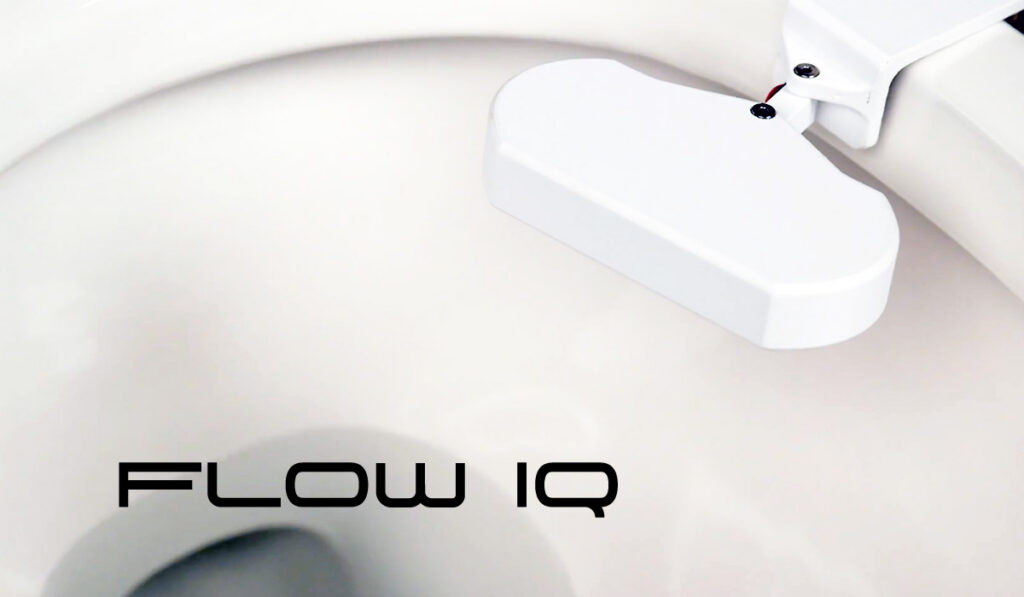
FlowIQ is developing a small device that attaches to any standard toilet and reads what a bathroom visit already contains.
It is designed to measure hydration and screen for early signs of urinary tract infection by spectroscopy, with nothing to collect and nothing to do differently.
For someone at risk of either, that means a daily check that never becomes a task. It also means proving that optics compact enough to clamp onto a toilet can read chemistry reliably, before there is a product to sell and on a pre-seed budget.
A Fashion Smartwatch Shipped by the Millions
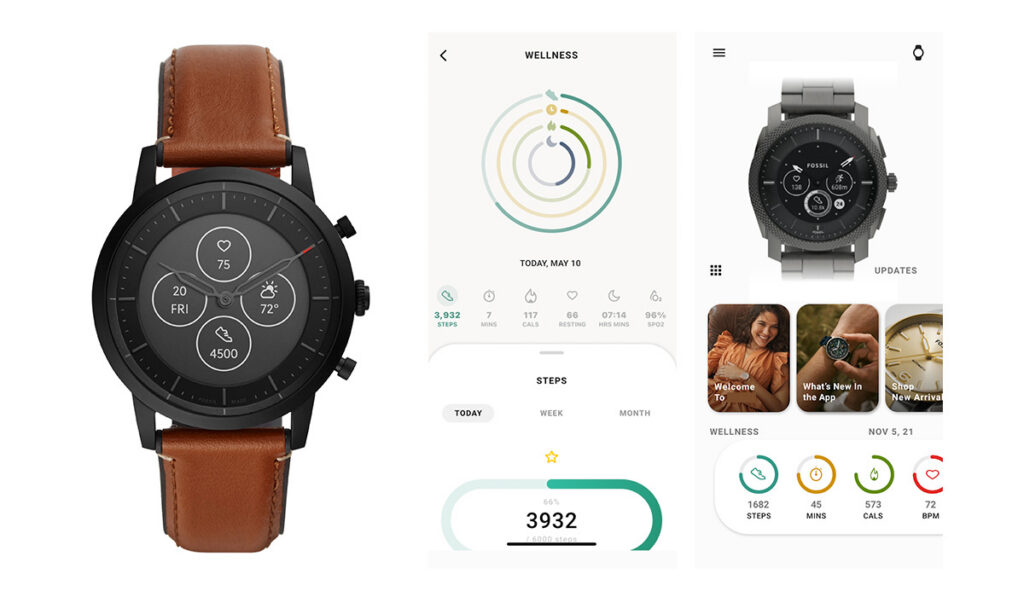
A global fashion brand’s smartwatches reached millions of wrists across several product generations, and they were designed to look like watches first.
Under the face they tracked health and activity, moved logs and firmware updates to a phone over Bluetooth, and ran on a battery sized for a fashion case.
For the wearer, that meant a watch chosen for how it looked that still did what a smartwatch does. It also meant pairing with every phone and OS version its wearers owned, each handling Bluetooth its own way, at a scale where a one-in-a-million quirk came up every day.

A Meditation Device Built to Survive Its First Five Minutes
Hyperice’s Core™ Meditation Trainer is a handheld device you cup in both palms, with heart sensors in the handles and a pulse you breathe along with.
It reads heart rate and heart rate variability to tell when you have settled into a focused state, and the app’s guided sessions respond to that.
For someone who wonders whether they are meditating right, that means a device that can tell them. It also means a consumer product whose first act out of the box is updating its own firmware over Bluetooth, in a living room, where a failed update is a returned product.


A Health Tracker Built for a Four-Year-Old’s Wrist
Kiddo began at GoodParents as a wristband for children ages 4 to 10, built to give parents real-time insight into their child’s health and wellbeing.
The band reads temperature, perspiration, heart rate, and motion, and the parent app turns those readings into scores for health, activity, sleep, and emotional wellbeing.
That means a parent sees how their child is sleeping and coping, along with how active they are. It also means sensors on a small child’s wrist, worn through play and sleep, have to read steadily enough to become a score a parent can trust.


A Pro-Level Radar Gun That Lives on the Coach’s Phone
Pocket Radar makes radar guns used everywhere from MLB coaching staffs to youth teams.
The Smart Coach Radar™ sends every reading over Bluetooth to the Pocket Radar app, which records video with the speed embedded in it, calls the number out loud, and tracks results over time.
That means an athlete sees which pitch or swing produced which number and builds a record of progress. It also means every reading has to reach the app, even when a coach is running ten radars across a few shared iPads at the same practice.

The World’s First Smartphone Breathalyzer
Smart Privacy Glass on a Scalable Embedded Linux Platform

A Sound Amplifier Its Wearer Tunes From Their Own Phone
A Personal Urinalysis Device, Investor-Ready on a Pre-Seed Budget
A Building Automation Concept Proven in the Real World in Weeks

A Fashion Smartwatch Shipped by the Millions
A Meditation Device Built to Survive Its First Five Minutes
A Health Tracker Built for a Four-Year-Old’s Wrist
A Pro-Level Radar Gun That Lives on the Coach’s Phone
The World’s First Smartphone Breathalyzer
BACtrack was the first company the FDA allowed to market breathalyzers for consumer use, and in 2013 it released the world’s first smartphone breathalyzer.
BACtrack Mobile pairs with a phone over Bluetooth, turning a breath sample into a blood alcohol estimate on the screen in the person’s hand.
That means anyone can know their number before making a decision that depends on it. It also means an accuracy people stake real decisions on has to survive a wireless link to whatever phone they happen to carry.

Smart Privacy Glass on a Scalable Embedded Linux Platform
CLiC™ is Cardinal IG’s smart privacy glass, and after more than ten years of development it entered full-scale production in 2026.
A pane switches from clear to private in under a tenth of a second, with no tint or distortion, and ties into smart home and building control systems.
For a home or a hospital room, that means privacy on command with no blinds or drapes. It also means a window that is now a connected device, one that has to stay secure and keep working for as long as the glass does, and be built the same way for every manufacturer who puts it into a window, glass door, or glass partition.
A Sound Amplifier Its Wearer Tunes From Their Own Phone
Ear Technology Corporation designs Tweak hearing products with audiologist Dr. Daniel R. Schumaier, drawing on 50 years of clinical practice.
TweakConnect pairs a Tweak sound amplifier with a smartphone app where the wearer picks an amplification profile, fine-tunes it, and switches programs as their surroundings change.
That means the wearer decides what sounds right, in the room where it matters. It also means a Bluetooth connection that has to work with whatever phone the wearer happens to own, from flagships to budget Android handsets that each handle Bluetooth their own way.
A Personal Urinalysis Device, Investor-Ready on a Pre-Seed Budget
FlowIQ is developing a small device that attaches to any standard toilet and reads what a bathroom visit already contains.
It is designed to measure hydration and screen for early signs of urinary tract infection by spectroscopy, with nothing to collect and nothing to do differently.
For someone at risk of either, that means a daily check that never becomes a task. It also means proving that optics compact enough to clamp onto a toilet can read chemistry reliably, before there is a product to sell and on a pre-seed budget.
A Building Automation Concept Proven in the Real World in Weeks
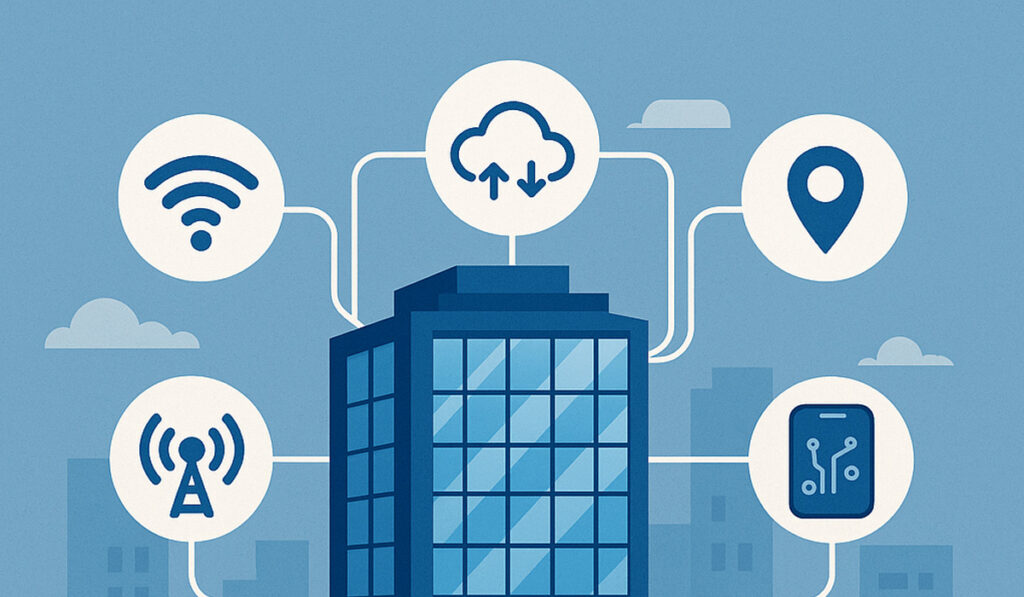
A global building automation company is developing an automation platform for commercial buildings, one that controls and monitors dense fleets of connected devices across facilities shared by many tenants.
For a building operator, the aim is one system running the connected devices of an entire property. It also means radio working through metal enclosures and motor interference at extreme device density, and a security model that has to hold across every tenant, device, and door it touches.
A Fashion Smartwatch Shipped by the Millions
A global fashion brand’s smartwatches reached millions of wrists across several product generations, and they were designed to look like watches first.
Under the face they tracked health and activity, moved logs and firmware updates to a phone over Bluetooth, and ran on a battery sized for a fashion case.
For the wearer, that meant a watch chosen for how it looked that still did what a smartwatch does. It also meant pairing with every phone and OS version its wearers owned, each handling Bluetooth its own way, at a scale where a one-in-a-million quirk came up every day.
A Meditation Device Built to Survive Its First Five Minutes
Hyperice’s Core™ Meditation Trainer is a handheld device you cup in both palms, with heart sensors in the handles and a pulse you breathe along with.
It reads heart rate and heart rate variability to tell when you have settled into a focused state, and the app’s guided sessions respond to that.
For someone who wonders whether they are meditating right, that means a device that can tell them. It also means a consumer product whose first act out of the box is updating its own firmware over Bluetooth, in a living room, where a failed update is a returned product.
A Health Tracker Built for a Four-Year-Old’s Wrist
Kiddo began at GoodParents as a wristband for children ages 4 to 10, built to give parents real-time insight into their child’s health and wellbeing.
The band reads temperature, perspiration, heart rate, and motion, and the parent app turns those readings into scores for health, activity, sleep, and emotional wellbeing.
That means a parent sees how their child is sleeping and coping, along with how active they are. It also means sensors on a small child’s wrist, worn through play and sleep, have to read steadily enough to become a score a parent can trust.
A Pro-Level Radar Gun That Lives on the Coach’s Phone
Pocket Radar makes radar guns used everywhere from MLB coaching staffs to youth teams.
The Smart Coach Radar™ sends every reading over Bluetooth to the Pocket Radar app, which records video with the speed embedded in it, calls the number out loud, and tracks results over time.
That means an athlete sees which pitch or swing produced which number and builds a record of progress. It also means every reading has to reach the app, even when a coach is running ten radars across a few shared iPads at the same practice.
Connected products, engineered as one.






Our latest thinking on connected product development.

Talk to the Team That Builds for Scale
Quick Discovery Call
Team Consultation