Systems
End-to-end system design for connected Devices
We architect devices, mobile, and cloud as one system for regulated medical devices, digital health, and connected products.

What Sets Us Apart
Problems we solve for
System Challenges That Derail Connected Device Programs
We architect connected device systems with cross-stack planning to prevent integration failures, security gaps, and performance issues.

System Integration Failures
Common Scenarios
- Device, mobile, and backend teams building against incompatible assumptions
- State synchronization breaking across offline/online transitions
- Commands not reaching devices reliably
- OTA updates that work in testing but fail in production
- API versioning conflicts discovered during integration

Security & Compliance Risks
Common Scenarios
- Security boundaries that don’t align across the stack
- Authentication failing between layers
- Key management and encryption strategy gaps
- Regulatory review finding system-level gaps too late

Performance & Scalability Issues
Common Scenarios
- Latency budgets that don’t add up across device/mobile/cloud
- Power and battery constraints are compounding across system design
- Data flows that bottleneck under real-world conditions
- Cloud infrastructure costs are scaling beyond projections

Unidentified Technical Assumptions
Common Scenarios
- Critical technical paths are unvalidated until integration
- Technology selections that don’t work together
- Requirements conflicts discovered during integration
- Regulatory implications of technical decisions surfacing too late
Our Systems Approach
Architecting Device, Mobile, and Cloud as One Integrated System
We produce the traceability matrices, design rationale, and interface specifications that regulators expect, and maintain them as living documentation.
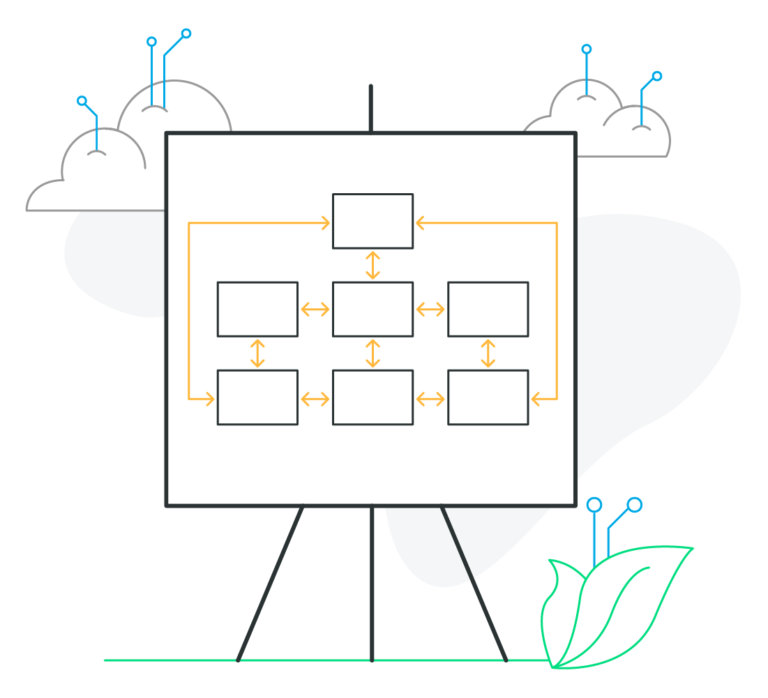
The specialist problem
How we design differently
What this looks like in practice
When we architect device-to-cloud communication:
- Updates work in the field without breaking devices already deployed
- The app handles spotty connectivity and syncs reliably when connection returns
- Security works as one system, from initial device setup through cloud data storage
- Performance accounts for Bluetooth timing, cellular realities, and battery constraints
- Design decisions are documented with the rationale regulators need to see


The Results
System Architecture Expertise
From Edge Processing to EHR Integration
Technical evaluators often ask if we’ve solved problems like theirs. Here are system integration patterns we’ve architected across multiple connected device programs.

Data Acquisition & Edge Processing

Store-and-Forward via Mobile/Gateway

Provisioning & Device Control

OTA & Configuration Pipeline

EHR/HL7/FHIR Integration

Multi-Device Coordination
Our Systems Engineering Process
Requirements, Architecture, and Validation as Connected Disciplines
We produce the traceability matrices, design rationale, and interface specifications that regulators expect, maintained as living documentation.
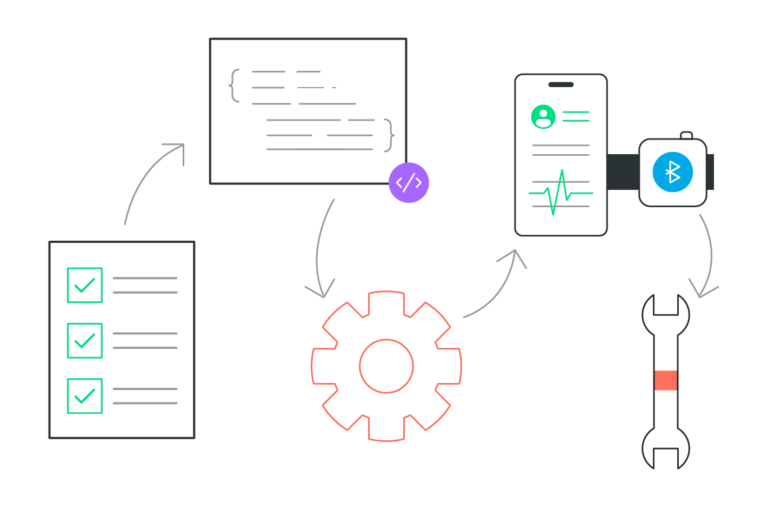
System Integration In Practice
Integrated Systems Across Our Capabilities
Systems thinking isn’t separate from our technical work; it’s embedded in how we deliver capabilities across the stack and cross-cutting concerns.

Embedded Software

Mobile Apps

Web Apps & Backends

Electronics
Architected Across Medical, Clinical & Connected Product Programs.
Each of these systems required formal boundaries, traceability, and integration across devices, apps, and cloud.

A Personal Urinalysis Device, Investor-Ready on a Pre-Seed Budget
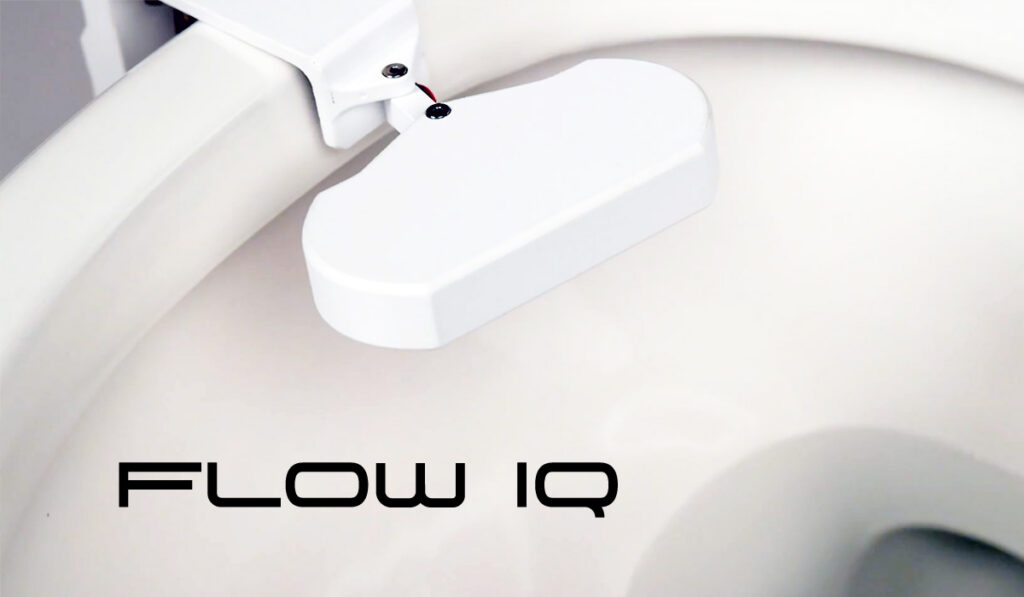
FlowIQ is developing a small device that attaches to any standard toilet and reads what a bathroom visit already contains.
It is designed to measure hydration and screen for early signs of urinary tract infection by spectroscopy, with nothing to collect and nothing to do differently.
For someone at risk of either, that means a daily check that never becomes a task. It also means proving that optics compact enough to clamp onto a toilet can read chemistry reliably, before there is a product to sell and on a pre-seed budget.

Sleep Apnea Therapy, Connected From Body to Cloud
Inspire® is the first FDA-approved neurostimulation therapy for moderate to severe obstructive sleep apnea.
A small implant stimulates the nerve that controls the tongue in time with the patient’s breathing, and a connected system sits around it, with a Bluetooth remote the patient holds, an app, and a clinician web portal that monitors the implant wirelessly.
For someone who could never live with a mask, that means sleeping with nothing on their face and starting therapy with a click. It also means the system around a Class III implant has moved through several device generations while every implant already placed stays in a body for years, so no part of the system can change without accounting for every implant in the field.


Next-Generation Remote Management for a Cath Lab Device System
One in four angiography patients has chronic kidney disease, and the contrast dye that makes the procedure possible is hard on the kidneys.
Osprey Medical’s FDA-cleared DyeVert™ PLUS diverts part of the dye before it reaches the patient, cutting the amount delivered by about 40 percent with no loss of image quality, and tracks each patient’s cumulative dose against their kidney function in real time.
For those patients, that means a heart procedure with less risk of kidney injury. It also means a tablet talking wirelessly to bedside devices inside a cath lab, one of the noisiest radio environments in a hospital, where nothing can drop mid-procedure.


A Connected Care Platform Around an Implanted Insulin Pump
Portal Diabetes holds FDA Breakthrough Device designation for the Portal Pump™, an implantable insulin delivery system.
The pump is designed to sit in the abdomen, dose from a continuous glucose monitor with a heat-stable concentrated insulin, and take refills in a clinic after weeks or months.
For someone with type 1 diabetes, that means no carbohydrate counting, no meal announcements, and no waking in the night. It also means a loop that closes with no one in it, which has to be trusted before it is ever implanted and then stays in for five to seven years.


A Building Automation Concept Proven in the Real World in Weeks
A smart building startup is developing an automation platform for commercial buildings, one that controls and monitors dense fleets of connected devices across facilities shared by many tenants.
For a building operator, the aim is one system running the connected devices of an entire property. It also means radio working through metal enclosures and motor interference at extreme device density, and a security model that has to hold across every tenant, device, and door it touches.

An Implanted Therapy Its Clinicians Configure From Anywhere
A stealth-stage medical startup is developing an implanted neuromodulation therapy that its clinicians can adjust without the patient in the room.
For the patient, that means a therapy that changes when it needs to instead of at the next appointment.
It also means every adjustment travels from a clinician’s screen to a device inside someone’s body, and that path has to be trusted at Class III stakes before anything is implanted.

An Implant That Turns Thought Into Touchscreen Control
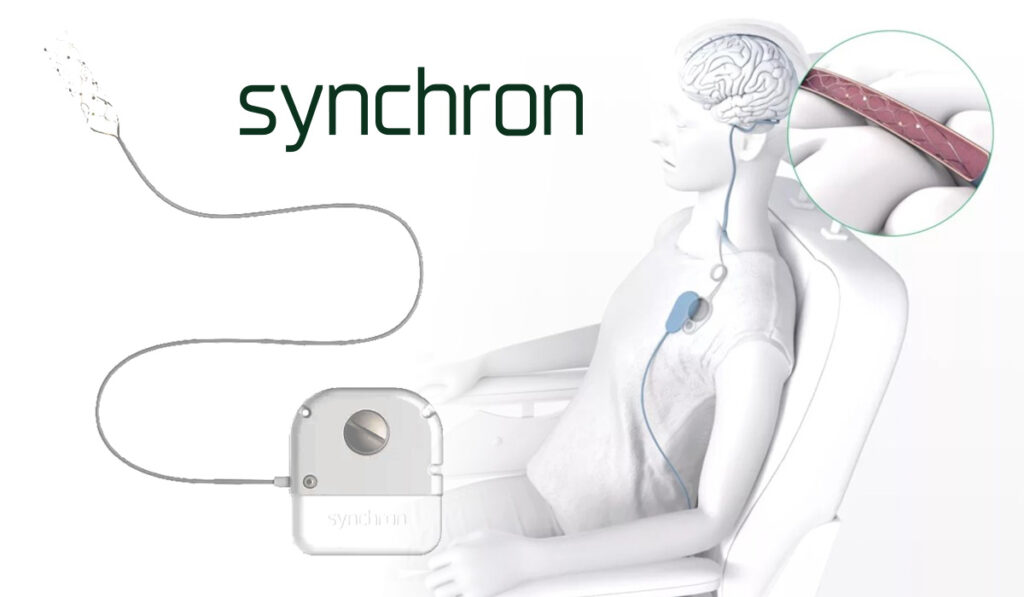
Synchron ran the first FDA-approved clinical trial of a permanently implanted brain-computer interface, and all six patients met the primary safety endpoint.
The Stentrode® is placed through a blood vessel, with no open brain surgery, and sits in a vein beside the motor cortex reading the intent to move.
For someone with severe paralysis, that means texting, browsing, and opening apps by thought alone. It also means the connection out of the body is the whole product, at Class III stakes. Nothing the implant does reaches a screen unless that link holds.
A Personal Urinalysis Device, Investor-Ready on a Pre-Seed Budget
Sleep Apnea Therapy, Connected From Body to Cloud
Next-Generation Remote Management for a Cath Lab Device System
A Connected Care Platform Around an Implanted Insulin Pump
A Building Automation Concept Proven in the Real World in Weeks
An Implanted Therapy Its Clinicians Configure From Anywhere
An Implant That Turns Thought Into Touchscreen Control
A Personal Urinalysis Device, Investor-Ready on a Pre-Seed Budget
FlowIQ is developing a small device that attaches to any standard toilet and reads what a bathroom visit already contains.
It is designed to measure hydration and screen for early signs of urinary tract infection by spectroscopy, with nothing to collect and nothing to do differently.
For someone at risk of either, that means a daily check that never becomes a task. It also means proving that optics compact enough to clamp onto a toilet can read chemistry reliably, before there is a product to sell and on a pre-seed budget.
Sleep Apnea Therapy, Connected From Body to Cloud
Inspire® is the first FDA-approved neurostimulation therapy for moderate to severe obstructive sleep apnea.
A small implant stimulates the nerve that controls the tongue in time with the patient’s breathing, and a connected system sits around it, with a Bluetooth remote the patient holds, an app, and a clinician web portal that monitors the implant wirelessly.
For someone who could never live with a mask, that means sleeping with nothing on their face and starting therapy with a click. It also means the system around a Class III implant has moved through several device generations while every implant already placed stays in a body for years, so no part of the system can change without accounting for every implant in the field.
Next-Generation Remote Management for a Cath Lab Device System
One in four angiography patients has chronic kidney disease, and the contrast dye that makes the procedure possible is hard on the kidneys.
Osprey Medical’s FDA-cleared DyeVert™ PLUS diverts part of the dye before it reaches the patient, cutting the amount delivered by about 40 percent with no loss of image quality, and tracks each patient’s cumulative dose against their kidney function in real time.
For those patients, that means a heart procedure with less risk of kidney injury. It also means a tablet talking wirelessly to bedside devices inside a cath lab, one of the noisiest radio environments in a hospital, where nothing can drop mid-procedure.
A Connected Care Platform Around an Implanted Insulin Pump
Portal Diabetes holds FDA Breakthrough Device designation for the Portal Pump™, an implantable insulin delivery system.
The pump is designed to sit in the abdomen, dose from a continuous glucose monitor with a heat-stable concentrated insulin, and take refills in a clinic after weeks or months.
For someone with type 1 diabetes, that means no carbohydrate counting, no meal announcements, and no waking in the night. It also means a loop that closes with no one in it, which has to be trusted before it is ever implanted and then stays in for five to seven years.
A Building Automation Concept Proven in the Real World in Weeks
A smart building startup is developing an automation platform for commercial buildings, one that controls and monitors dense fleets of connected devices across facilities shared by many tenants.
For a building operator, the aim is one system running the connected devices of an entire property. It also means radio working through metal enclosures and motor interference at extreme device density, and a security model that has to hold across every tenant, device, and door it touches.
An Implanted Therapy Its Clinicians Configure From Anywhere
A stealth-stage medical startup is developing an implanted neuromodulation therapy that its clinicians can adjust without the patient in the room.
For the patient, that means a therapy that changes when it needs to instead of at the next appointment.
It also means every adjustment travels from a clinician’s screen to a device inside someone’s body, and that path has to be trusted at Class III stakes before anything is implanted.
An Implant That Turns Thought Into Touchscreen Control
Synchron ran the first FDA-approved clinical trial of a permanently implanted brain-computer interface, and all six patients met the primary safety endpoint.
The Stentrode® is placed through a blood vessel, with no open brain surgery, and sits in a vein beside the motor cortex reading the intent to move.
For someone with severe paralysis, that means texting, browsing, and opening apps by thought alone. It also means the connection out of the body is the whole product, at Class III stakes. Nothing the implant does reaches a screen unless that link holds.
Connected Medical Systems, Engineered As One.







Team Alignment Isn't System Integration


Quick Discovery Call

Team Consultation