Mobile Apps
iOS & Android Apps for Connected Devices
We specialize in commercial and medical device apps where connectivity, security, compliance, and usability are critical.

What Sets Us Apart
MObile Apps in Connected Systems
Apps are where your connected system gets judged.
Mobile apps are the primary touchpoint for your users and where your entire connected product is evaluated. Users don’t see firmware constraints or cloud latency; they see an experience that either works or fails.
We build apps with system-level awareness. Because we work across firmware, mobile, cloud, and UX, we design the mobile experience around what the system can reliably deliver.
The Result: Mobile apps that integrate cleanly with your connected device ecosystem, handle real-world connectivity, meet regulatory constraints, and scale from beta to production.

What we solve for
Mobile Development at Every Stage
Whether you’re building from scratch, validating user workflows, looking to accelerate development, or fixing critical production issues, we can help.

Building New Products
Connectivity Issues
- BLE connection reliability and state synchronization across app, firmware, and cloud
- Offline-first architecture and data persistence decisions
- Device provisioning and pairing flow design
Security & Compliance Gaps
- Authentication architecture and secure credential storage
- HIPAA compliance requirements and PHI protection
- Audit logging and regulatory documentation needs
User Experience Risks
- Onboarding flows that handle pairing failures and weak signal
- Connection state feedback and error recovery UX
- Accessibility compliance and medical device usability standards
Performance & Resource Constraints
- Real-time sensor data rendering without dropped frames or UI lag
- Background Bluetooth connection management and battery drain
- App size optimization for regulatory submissions

Validating Feasibility
Device Connectivity Failures
- BLE pairing failures across iOS/Android device matrix
- Connection stability during movement and signal interference
- Background connection maintenance and app state transitions
Data Synchronization Issues
- Mobile-to-device command latency and timeout handling
- State consistency during offline/online transitions
- Cloud sync conflict resolution under degraded connectivity
Critical Workflow Breakdowns
- Firmware update interruptions and rollback failures
- Multi-device management complexity
- Authentication flow reliability under real-world conditions

Accelerating Development
Connectivity Implementation Gaps
- BLE/Wi-Fi device discovery and pairing workflows
- Firmware OTA update UI and state management
- Real-time sensor data display and push notification integration
Platform & Integration Challenges
- Native iOS/Swift and Android/Kotlin expertise
- Mobile/firmware and mobile/cloud API coordination
- App Store/Play Store compliance and regulatory documentation
Feature Delivery Delays
- Multi-device management and user provisioning workflows
- Data visualization, export features, and biometric authentication
- Features your team can’t prioritize without sacrificing core development
Quality Infrastructure Gaps
- Automated UI testing for device interaction flows
- Platform-specific testing and CI/CD pipeline setup
- Crash reporting and analytics integration
Mobile App Expertise for Complex Connected Systems
The capabilities that enable intuitive, reliable, and system-aware mobile applications for connected medical devices and digital health products.
Device Connectivity & Integration
Connection Management
- BLE, WiFi, and web API connection flows with reconnection and background handling
- Background connection management across app states and termination
- Connectivity stacks that abstract platform inconsistencies in native BLE APIs
Device Provisioning & Configuration
- Device provisioning workflows for embedded WiFi and cellular configuration
- Custom binary protocol support beyond standard GATT profiles
Data Synchronization & Reliability
- Reliable data syncing across device, mobile app, and cloud
- Edge-case handling for timeouts, failures, interference, and offline states
Front-End Development
Implementation & Design Fidelity
- Native iOS (SwiftUI/UIKit) and Android (Jetpack Compose/Views) UI implementation
- Design system implementation and component library development
- Smooth animations, transitions, and gesture-based interactions
- Responsive layouts across screen sizes and accessibility modes
Performance & Reliability
- Performance optimization for rendering, scrolling, and memory usage
- Cross-platform code sharing strategies (when using React Native or Flutter)
Quality & Validation
- Unit/UI test traceability via language-specific tools (Kotlin annotations)
- Hardware-in-the-Loop testing with real or simulated BLE peripherals
App Security & Privacy
Device & Communication Security
- Secure device pairing and encrypted BLE/WiFi communication
- Authentication, authorization, and session management aligned with regulatory requirements
Data Protection & Storage
- Secure local storage using iOS Keychain and Android Keystore
- PHI and PII protection for HIPAA and GDPR compliance
Privacy & Compliance
- Data minimization, user consent, and App Store privacy manifest compliance
Scalable Mobile App Architecture
Structural Design
- Modular architecture isolating Class B/C components for simplified validation
- Separation of business logic, UI, and data layers for independent testing
- Dependency injection and abstraction layers isolating third-party dependencies
Data & State Management
- Offline-first database architecture (Room, Realm, Core Data) with automatic sync
- State management for complex device interactions and offline scenarios
Team & Lifecycle Support
- Code organization supporting multi-developer teams and long product lifecycles
- Refactoring strategies addressing architectural debt in existing applications
- CI/CD pipelines with automated testing, code coverage reporting, vulnerability scanning, and deployment automation
Cloud & Backend Integration
API & Server Integration
- RESTful API and GraphQL integration with authentication and error handling
- Third-party platform integration (EMR systems, cloud storage, analytics services)
- API contract definition and validation in collaboration with backend teams
Real-Time & Streaming Data
- WebSocket and MQTT implementation for live device data streaming
- Real-time data sync and conflict resolution for offline-first architectures
Device Ecosystem Support
- Backend service coordination for device provisioning and firmware updates
User-Centered Experience Design
UI Implementation & Polish
- High-fidelity UI implementation with performance and platform conventions
- Intuitive data visualization for sensor readings, health metrics, and device status
Connected Device UX Patterns
- UX patterns for device pairing, connection states, and offline/online transitions
- Onboarding flows optimized for authenticated, secure environments
Accessibility & Validation
- Accessibility compliance (WCAG) for clinical and consumer applications
- Iterative usability validation and refinement throughout development
- Usability engineering and human factors documentation (IEC 62366)
Encryption & Device Management
Cryptographic Implementation
- Custom end-to-end encryption for defense-in-depth against MITM attacks
- Hardware-backed key generation and storage via iOS Keychain and Android Keystore
- Local database encryption for PHI/PII protection
Security Analysis & Hardening
- Threat modeling and vulnerability analysis (MITM, certificate pinning, jailbreak detection)
Accessibility & Validation
- MDM configuration (Knox, Jamf, Intune) and Kiosk Mode for clinical deployments
Native & Cross-Platform Development
Platform Strategy
- Native development for high-performance, connectivity-intensive apps
- Cross-platform frameworks (Flutter/React Native/Maui) for sharing business logic across platforms or less connectivity-intensive workflows
- Shared architecture and code layering to maximize reuse
Quality & Performance
- Performance tuning across both platforms for connected workflows
- Strategic QA approach for connectivity scenarios and platform-specific behavior
IEC 62304 & Design Controls
Requirements & Regulatory Documentation
- Requirements traceability linking user needs, design inputs, and test cases
- Software architecture documentation and design output generation
- Design history file (DHF) preparation and regulatory submission support
Risk & Verification
- Risk management integration (ISO 14971) for software hazards and mitigations
- Verification and validation evidence with automated test coverage
Change Control & Supply Chain
- Change control and configuration management aligned with design controls
- Automated SBOM generation for vulnerability scanning and supply chain security
- SOUP management and third-party component risk analysis

Mobile App Device Connectivity & Integration
Connection Management
- BLE, WiFi, and web API connection flows with reconnection and background handling
- Background connection management across app states and termination
- Connectivity stacks that abstract platform inconsistencies in native BLE APIs
Device Provisioning & Configuration
- Device provisioning workflows for embedded WiFi and cellular configuration
- Custom binary protocol support beyond standard GATT profiles
Data Synchronization & Reliability
- Reliable data syncing across device, mobile app, and cloud
- Edge-case handling for timeouts, failures, interference, and offline states
Connection Management
- BLE, WiFi, and web API connection flows with reconnection and background handling
- Background connection management across app states and termination
- Connectivity stacks that abstract platform inconsistencies in native BLE APIs
Device Provisioning & Configuration
- Device provisioning workflows for embedded WiFi and cellular configuration
- Custom binary protocol support beyond standard GATT profiles
Data Synchronization & Reliability
- Reliable data syncing across device, mobile app, and cloud
- Edge-case handling for timeouts, failures, interference, and offline states
Mobile App Front-End Development
Implementation & Design Fidelity
- Native iOS (SwiftUI/UIKit) and Android (Jetpack Compose/Views) UI implementation
- Design system implementation and component library development
- Smooth animations, transitions, and gesture-based interactions
- Responsive layouts across screen sizes and accessibility modes
Performance & Reliability
- Performance optimization for rendering, scrolling, and memory usage
- Cross-platform code sharing strategies (when using React Native or Flutter)
Quality & Validation
- Unit/UI test traceability via language-specific tools (Kotlin annotations)
- Hardware-in-the-Loop testing with real or simulated BLE peripherals

Mobile App Security & Privacy
Device & Communication Security
- Secure device pairing and encrypted BLE/WiFi communication
- Authentication, authorization, and session management aligned with regulatory requirements
Data Protection & Storage
- Secure local storage using iOS Keychain and Android Keystore
- PHI and PII protection for HIPAA and GDPR compliance
Privacy & Compliance
- Data minimization, user consent, and App Store privacy manifest compliance

Scalable Mobile App Architecture
Structural Design
- Modular architecture isolating Class B/C components for simplified validation
- Separation of business logic, UI, and data layers for independent testing
- Dependency injection and abstraction layers isolating third-party dependencies
Data & State Management
- Offline-first database architecture (Room, Realm, Core Data) with automatic sync
- State management for complex device interactions and offline scenarios
Team & Lifecycle Support
- Code organization supporting multi-developer teams and long product lifecycles
- Refactoring strategies addressing architectural debt in existing applications
- CI/CD pipelines with automated testing, code coverage reporting, vulnerability scanning, and deployment automation

Mobile App Cloud & Backend Integration
API & Server Integration
- RESTful API and GraphQL integration with authentication and error handling
- Third-party platform integration (EMR systems, cloud storage, analytics services)
- API contract definition and validation in collaboration with backend teams
Real-Time & Streaming Data
- WebSocket and MQTT implementation for live device data streaming
- Real-time data sync and conflict resolution for offline-first architectures
Device Ecosystem Support
- Backend service coordination for device provisioning and firmware updates

Mobile App UX & UI Design
UI Implementation & Polish
- High-fidelity UI implementation with performance and platform conventions
- Intuitive data visualization for sensor readings, health metrics, and device status
Connected Device UX Patterns
- UX patterns for device pairing, connection states, and offline/online transitions
- Onboarding flows optimized for authenticated, secure environments
Accessibility & Validation
- Accessibility compliance (WCAG) for clinical and consumer applications
- Iterative usability validation and refinement throughout development
- Usability engineering and human factors documentation (IEC 62366)
Mobile App Encryption & Mobile Device Management (MDM)
Cryptographic Implementation
- Custom end-to-end encryption for defense-in-depth against MITM attacks
- Hardware-backed key generation and storage via iOS Keychain and Android Keystore
- Local database encryption for PHI/PII protection
Security Analysis & Hardening
- Threat modeling and vulnerability analysis (MITM, certificate pinning, jailbreak detection)
Accessibility & Validation
- MDM configuration (Knox, Jamf, Intune) and Kiosk Mode for clinical deployments

Mobile App Native & Cross-Platform Development
Platform Strategy
- Native development for high-performance, connectivity-intensive apps
- Cross-platform frameworks (Flutter/React Native/Maui) for sharing business logic across platforms or less connectivity-intensive workflows
- Shared architecture and code layering to maximize reuse
Quality & Performance
- Performance tuning across both platforms for connected workflows
- Strategic QA approach for connectivity scenarios and platform-specific behavior
Mobile App IEC 62304 & Design Controls
Requirements & Regulatory Documentation
- Requirements traceability linking user needs, design inputs, and test cases
- Software architecture documentation and design output generation
- Design history file (DHF) preparation and regulatory submission support
Risk & Verification
- Risk management integration (ISO 14971) for software hazards and mitigations
- Verification and validation evidence with automated test coverage
Change Control & Supply Chain
- Change control and configuration management aligned with design controls
- Automated SBOM generation for vulnerability scanning and supply chain security
- SOUP management and third-party component risk analysis
WHAT YOU GET
Production-Ready Apps Built for Regulatory Approval
We deliver tested, traceable iOS and Android apps, complete with design artifacts, verification evidence, and regulatory documentation.

Maintainable Source Code & Architecture
Modular architecture, comprehensive inline documentation, and clear design rationale mean your engineering team (or your next vendor) can understand, modify, and extend the app without archaeology work.
Medical Device UX Design System
Complete design system with wireframes, user flows, accessibility specs, and style guides aligned to FDA usability standards.
IEC 62304 Verification Evidence
Automated test suites with unit, integration, and UI tests provide code coverage metrics and IEC 62304-compliant test reports that satisfy auditors.
Requirements Traceability & Risk Analysis
Requirements traceability matrices and ISO 14971 risk analysis delivered throughout development and ready when you need them for submission.
Security & Privacy Documentation
Threat analysis, PHI protection implementation, encryption evidence, and cybersecurity documentation aligned to FDA premarket guidance and ready for submission.
App Store Submission Packages
Securely signed release binaries, build configurations, provisioning profiles, privacy documentation, and submission packages prepared to meet Apple and Google review requirements.
HOW WE WORK
Integration & Regulatory Evidence From the Start
We coordinate across disciplines, validate with real devices, and build regulatory evidence as we develop to prevent failures at integration and FDA review.

Cross-Discipline Integration
Mobile coordinated with firmware, backend, and clinical teams.
We work alongside your firmware, backend, and clinical teams throughout development, not just at integration points. Mobile architecture decisions account for device constraints, API capabilities, and clinical workflows from the start.
Example in practice: Hardware-in-the-Loop testing validates connectivity with real BLE devices, catching edge cases that simulators can’t replicate.
Offline-First Architecture
Data integrity is maintained even when connectivity fails.
Mobile apps for medical devices must be able to handle intermittent connectivity. We architect apps with local data persistence, sync conflict resolution, and queue management from the start—ensuring data integrity even when devices disconnect or users go offline.
Example in practice: When a glucose monitor loses a BLE connection mid-reading, queued data syncs automatically upon connectivity resume, with conflict resolution handling overlapping measurements.

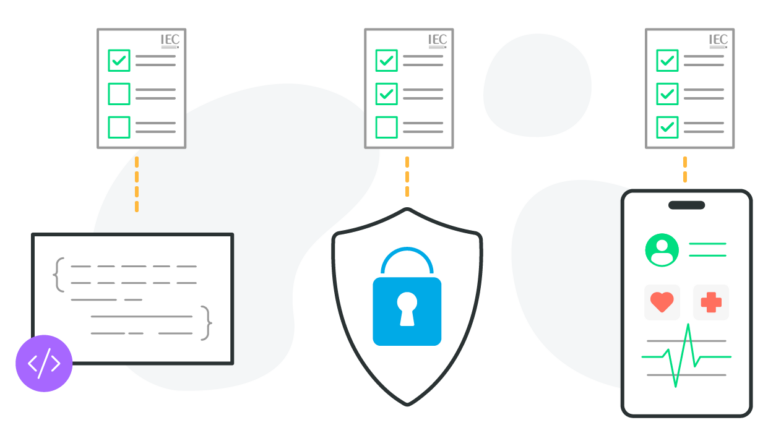
Regulatory Evidence as we build
IEC 62304 traceability and verification are integrated into the development process.
We don’t save compliance for the end. Requirements traceability, risk mitigations, and verification evidence are built alongside code. Formative usability testing happens in parallel with development.
Example in practice: Each sprint delivers not just working features but also the traceability matrices, risk analyses, and test protocols needed for your FDA submission, and prevents last-minute documentation scrambles.
See how we work across disciplines.
Apps That Carry the Weight of the Whole System
From consumer wellness to Class III medical devices, mobile apps shipped for real products, users, and regulatory submissions.

Reliable Device Connectivity for a Care-at-Home Platform
Current Health builds the platform hospitals use to care for patients at home instead of in a bed.
A patient goes home with a wearable and a kit of connected devices, and their vital signs and readings flow to a clinician’s dashboard, with telehealth on top.
For a patient, that means recovering in their own bed with someone still watching. It also means hospital-grade monitoring riding on consumer Bluetooth, in homes no one controls, across medical and consumer devices from different makers that each behave differently.


A Fashion Smartwatch Shipped by the Millions
A global fashion brand’s smartwatches reached millions of wrists across several product generations, and they were designed to look like watches first.
Under the face they tracked health and activity, moved logs and firmware updates to a phone over Bluetooth, and ran on a battery sized for a fashion case.
For the wearer, that meant a watch chosen for how it looked that still did what a smartwatch does. It also meant pairing with every phone and OS version its wearers owned, each handling Bluetooth its own way, at a scale where a one-in-a-million quirk came up every day.


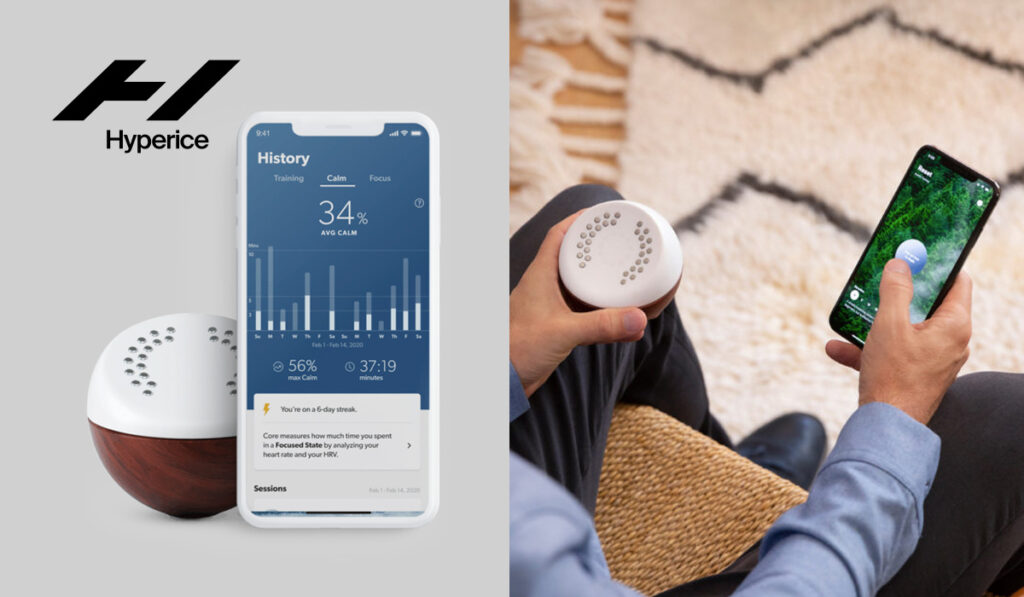
A Meditation Device Built to Survive Its First Five Minutes
Hyperice’s Core™ Meditation Trainer is a handheld device you cup in both palms, with heart sensors in the handles and a pulse you breathe along with.
It reads heart rate and heart rate variability to tell when you have settled into a focused state, and the app’s guided sessions respond to that.
For someone who wonders whether they are meditating right, that means a device that can tell them. It also means a consumer product whose first act out of the box is updating its own firmware over Bluetooth, in a living room, where a failed update is a returned product.

Sleep Apnea Therapy, Connected From Body to Cloud
Inspire® is the first FDA-approved neurostimulation therapy for moderate to severe obstructive sleep apnea.
A small implant stimulates the nerve that controls the tongue in time with the patient’s breathing, and a connected system sits around it, with a Bluetooth remote the patient holds, an app, and a clinician web portal that monitors the implant wirelessly.
For someone who could never live with a mask, that means sleeping with nothing on their face and starting therapy with a click. It also means the system around a Class III implant has moved through several device generations while every implant already placed stays in a body for years, so no part of the system can change without accounting for every implant in the field.


Next-Generation Remote Management for a Cath Lab Device System
One in four angiography patients has chronic kidney disease, and the contrast dye that makes the procedure possible is hard on the kidneys.
Osprey Medical’s FDA-cleared DyeVert™ PLUS diverts part of the dye before it reaches the patient, cutting the amount delivered by about 40 percent with no loss of image quality, and tracks each patient’s cumulative dose against their kidney function in real time.
For those patients, that means a heart procedure with less risk of kidney injury. It also means a tablet talking wirelessly to bedside devices inside a cath lab, one of the noisiest radio environments in a hospital, where nothing can drop mid-procedure.


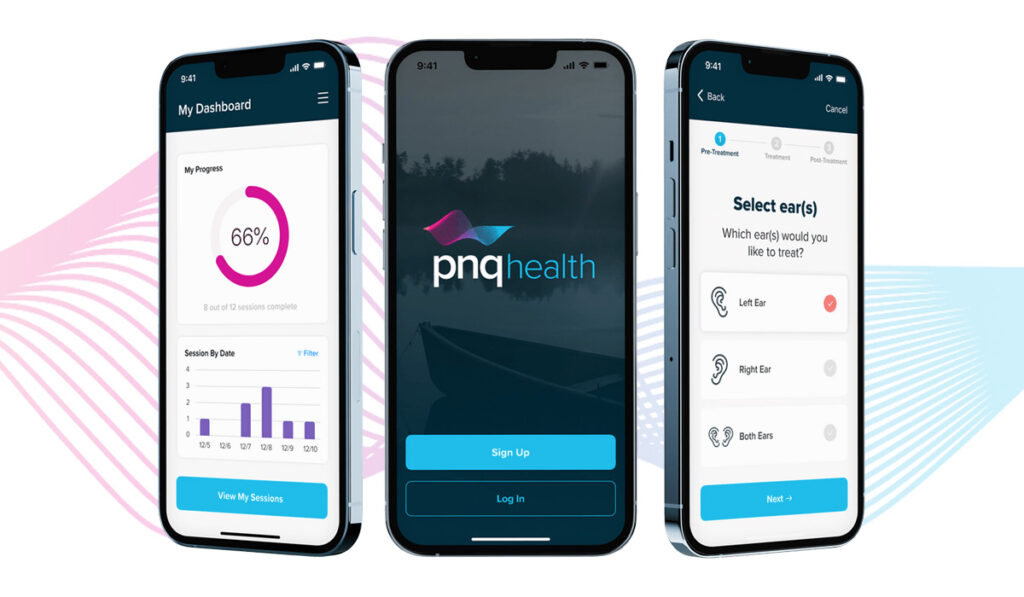
A Tinnitus Therapy SaMD, Concept to FDA Clearance in Months
One in ten people lives with persistent tinnitus, the ringing that does not stop.
PNQ Health’s therapy is software. An iOS app delivers personalized sound therapy through ordinary earbuds, and the app itself is what the FDA cleared, as Class II software as a medical device.
For a patient, that means treatment at home, self-guided, with a clinician overseeing it remotely. It also means the app is the entire clinical product, so it has to hold to a medical standard while feeling like something a person opens every day.

A Connected Care Platform Around an Implanted Insulin Pump
Portal Diabetes holds FDA Breakthrough Device designation for the Portal Pump™, an implantable insulin delivery system.
The pump is designed to sit in the abdomen, dose from a continuous glucose monitor with a heat-stable concentrated insulin, and take refills in a clinic after weeks or months.
For someone with type 1 diabetes, that means no carbohydrate counting, no meal announcements, and no waking in the night. It also means a loop that closes with no one in it, which has to be trusted before it is ever implanted and then stays in for five to seven years.


A Non-Invasive Cardiac Assessment Platform for Clinical Studies
Knowing how well a failing heart is pumping usually takes an echocardiogram and a trained operator, or a catheter threaded into the heart.
Sensydia’s Cardiac Performance System reads ejection fraction, cardiac output, and pulmonary artery pressure from disposable sensors on the chest, in minutes, at the bedside. Its ejection fraction measurement was first FDA-cleared in 2018, and the full platform holds Breakthrough Device Designation.
For a patient in an ICU or emergency department, that means answers without a referral or a procedure. It also means one measurement running across sensors, a gateway, a tablet, and the cloud, carrying patient data the whole way, while the platform is still being proven in clinical studies.


An Implanted Therapy Its Clinicians Configure From Anywhere
A stealth-stage medical startup is developing an implanted neuromodulation therapy that its clinicians can adjust without the patient in the room.
For the patient, that means a therapy that changes when it needs to instead of at the next appointment.
It also means every adjustment travels from a clinician’s screen to a device inside someone’s body, and that path has to be trusted at Class III stakes before anything is implanted.
Reliable Device Connectivity for a Care-at-Home Platform
A Fashion Smartwatch Shipped by the Millions
A Meditation Device Built to Survive Its First Five Minutes
Sleep Apnea Therapy, Connected From Body to Cloud
Next-Generation Remote Management for a Cath Lab Device System
A Tinnitus Therapy SaMD, Concept to FDA Clearance in Months
Reliable Device Connectivity for a Care-at-Home Platform
Current Health builds the platform hospitals use to care for patients at home instead of in a bed.
A patient goes home with a wearable and a kit of connected devices, and their vital signs and readings flow to a clinician’s dashboard, with telehealth on top.
For a patient, that means recovering in their own bed with someone still watching. It also means hospital-grade monitoring riding on consumer Bluetooth, in homes no one controls, across medical and consumer devices from different makers that each behave differently.
A Fashion Smartwatch Shipped by the Millions
A global fashion brand’s smartwatches reached millions of wrists across several product generations, and they were designed to look like watches first.
Under the face they tracked health and activity, moved logs and firmware updates to a phone over Bluetooth, and ran on a battery sized for a fashion case.
For the wearer, that meant a watch chosen for how it looked that still did what a smartwatch does. It also meant pairing with every phone and OS version its wearers owned, each handling Bluetooth its own way, at a scale where a one-in-a-million quirk came up every day.
A Meditation Device Built to Survive Its First Five Minutes
Hyperice’s Core™ Meditation Trainer is a handheld device you cup in both palms, with heart sensors in the handles and a pulse you breathe along with.
It reads heart rate and heart rate variability to tell when you have settled into a focused state, and the app’s guided sessions respond to that.
For someone who wonders whether they are meditating right, that means a device that can tell them. It also means a consumer product whose first act out of the box is updating its own firmware over Bluetooth, in a living room, where a failed update is a returned product.
Sleep Apnea Therapy, Connected From Body to Cloud
Inspire® is the first FDA-approved neurostimulation therapy for moderate to severe obstructive sleep apnea.
A small implant stimulates the nerve that controls the tongue in time with the patient’s breathing, and a connected system sits around it, with a Bluetooth remote the patient holds, an app, and a clinician web portal that monitors the implant wirelessly.
For someone who could never live with a mask, that means sleeping with nothing on their face and starting therapy with a click. It also means the system around a Class III implant has moved through several device generations while every implant already placed stays in a body for years, so no part of the system can change without accounting for every implant in the field.
Next-Generation Remote Management for a Cath Lab Device System
One in four angiography patients has chronic kidney disease, and the contrast dye that makes the procedure possible is hard on the kidneys.
Osprey Medical’s FDA-cleared DyeVert™ PLUS diverts part of the dye before it reaches the patient, cutting the amount delivered by about 40 percent with no loss of image quality, and tracks each patient’s cumulative dose against their kidney function in real time.
For those patients, that means a heart procedure with less risk of kidney injury. It also means a tablet talking wirelessly to bedside devices inside a cath lab, one of the noisiest radio environments in a hospital, where nothing can drop mid-procedure.
A Tinnitus Therapy SaMD, Concept to FDA Clearance in Months
One in ten people lives with persistent tinnitus, the ringing that does not stop.
PNQ Health’s therapy is software. An iOS app delivers personalized sound therapy through ordinary earbuds, and the app itself is what the FDA cleared, as Class II software as a medical device.
For a patient, that means treatment at home, self-guided, with a clinician overseeing it remotely. It also means the app is the entire clinical product, so it has to hold to a medical standard while feeling like something a person opens every day.
Connected Medical Systems, Engineered As One.





Users Don't See Your Firmware. They See Your App.

Quick Discovery Call
Team Consultation