Connected In-Clinic Devices

Engineered for FDA Clearance & Hospital Deployment

From procedure-enabling devices to clinical diagnostic systems, we design every layer of the connected system, so the same engineering satisfies the submission and the hospital review.

Discuss your program's needs
Clinician operating a connected device beside a patient in a hospital procedure room.

What Sets Us Apart

Clinical Environment Architecture
Hospital RF, network infrastructure, and deployment realities shape the architecture from the start.
Fits the Clinical Workflow
System behavior, data timing, and interface design follow how clinicians work under procedural pressure.
One Security Architecture, Two Reviews
The cybersecurity solution produces the 524B evidence FDA requires and the disclosures hospital security teams ask for.
Strengthening Devices Already in the Field
Security assessments, next-generation redesigns, and FDA response support for systems already deployed in hospitals.

The Connected In-Clinic System

An In-Clinic Device Is One Component of a Five-Layer System Inside the Hospital
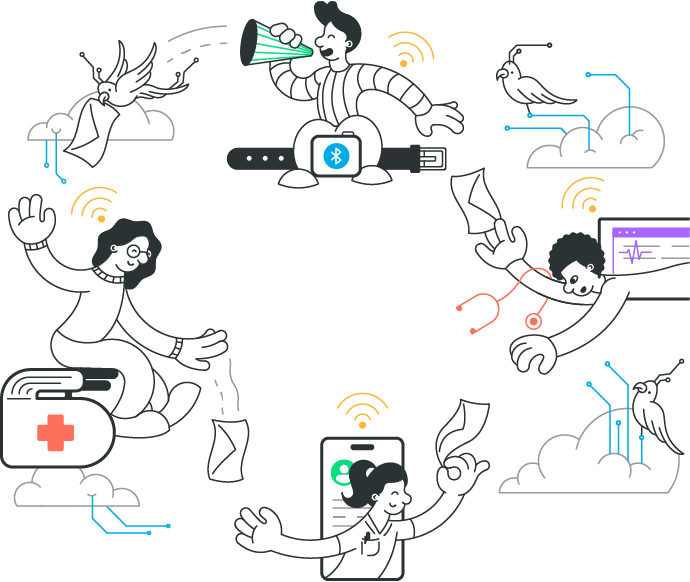
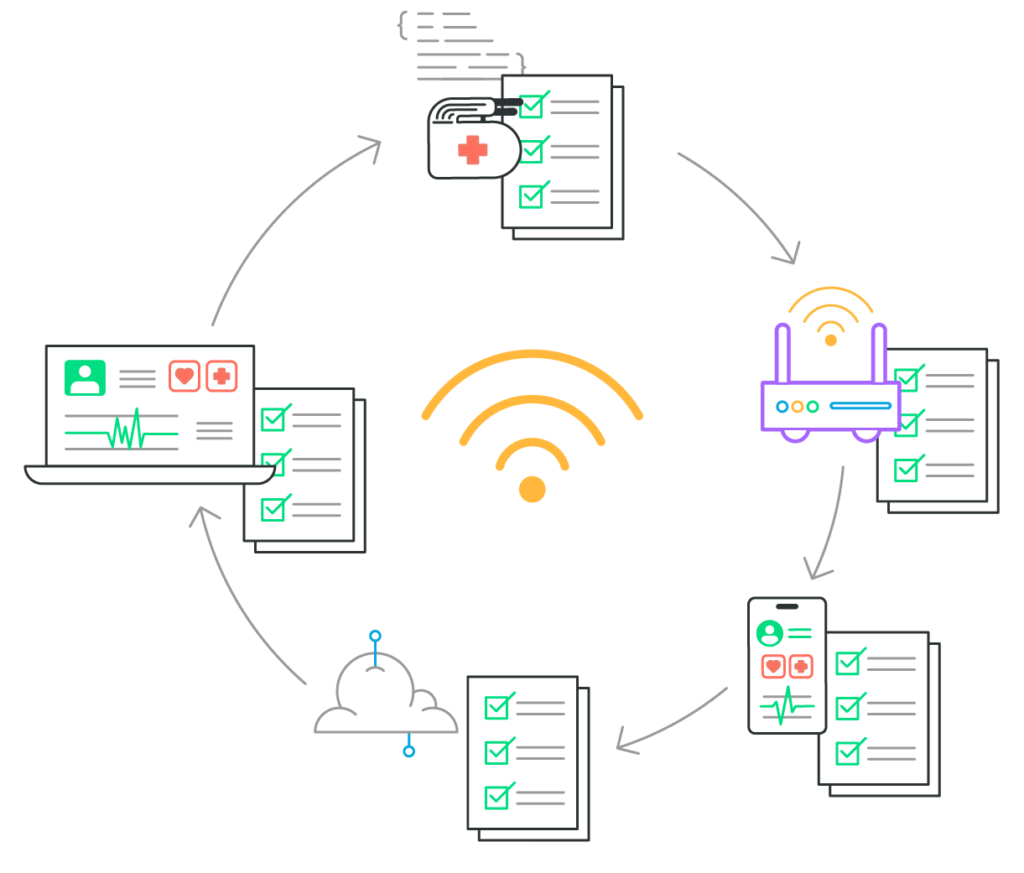
Most of what makes a connected in-clinic device work sits outside the device, in the hospital network and the systems it has to connect to. The device is the layer a clinician operates, so every command it receives and every reading it returns has to hold up in a live clinical setting.
Each layer has its own performance, security, and documentation requirements, and the most consequential faults happen where two layers meet. We build all five, so the engineers who design those meeting points are the engineers building the layers on either side.
Hero Homepage Varmobile
1
The Device
Electronics and embedded firmware controlling device behavior at the point of care.
2
The Wireless Link
BLE or Wi-Fi carrying commands and data through a congested hospital RF environment.
3
The Hospital Network
Integration with hospital infrastructure, with HL7 and FHIR into the EHR and DICOM into PACS.
4
The Cloud Platform
Fleet management, remote updates, and diagnostics across every facility.
5
The Clinician Interface
Applications at the point of care that tie the system together during procedures.

WHAT WE SOLVE FOR

Clinical Device Programs Break Down in Predictable Places

We’ve built across enough in-clinic programs to recognize where the clinical environment creates risk. These are the program-level problems we solve.
EXPAND ALL
Integration Challenges Icon

Wireless Works in the Lab and Fails in the Hospital

Connectivity performance validated on the bench does not predict behavior in a cath lab or radiology suite.
Why It Happens
RF congestion, shielded rooms, and hospital Wi-Fi that behaves differently at every facility never appear in lab validation.
What it costs
Connectivity failures surface during deployment, one hospital at a time, after the architecture is fixed.
Design History File Challenges Icon

The Device Fleet Can't Be Managed Remotely

Devices deployed across facilities need remote updates, logging, and diagnostics from the first installation.
Why It Happens
Programs architect for the first installation and treat fleet management as an operations problem to solve later.
What it costs
Every service call means sending someone on-site to a hospital, and the cost model breaks with each new installation.
Architecture Challenges Icon

Clinical Engineering Rejects the Network Architecture

Clinical engineering evaluates a device’s network behavior and integration before the hospital buys, and FDA clearance doesn’t answer their questions.
Why It Happens
Engineering teams design the network architecture for the FDA submission, so integration details, MDS2 disclosure, and interface standards wait until a hospital asks.
What it costs
Each sale stalls in review while the team answers questions, or reworks architecture, that should have been settled during design.
Connected System Verification and Validation Challenges Icon

Hospital IT Security Blocks Deployment

Hospital IT evaluates cybersecurity against its own standards, independent of what FDA requires.
Why It Happens
Programs treat cybersecurity as a submission artifact, so data handling, authentication architecture, and vulnerability management get documented for FDA and never engineered for hospital review.
What it costs
A device with a clean submission fails network security review, and the program finds out facility by facility.
Security As Documentation Challenges Icon

Workflow Integration Treated as a UX Problem

Fitting a device into a clinical workflow is an architecture problem that shapes system behavior, data timing, and how the device handles mid-procedure interruptions.
Why It Happens
Programs defer workflow to the interface layer and design the underlying system for technical convenience.
What it costs
Teams discover late that the system cannot support how clinicians actually use the device, and the fix reaches below the interface.
Partner Fragmentation Challenges Icon

Verification That Ignores Clinical Use Conditions

V&V protocols built around lab conditions miss the variables that define clinical use.
Why It Happens
RF interference, network variability across facilities, multi-user access, and procedural workflows stress the system in ways bench testing never models.
What it costs
Failures the protocol never tested for show up mid-procedure, in clinical studies or the field, where they’re most expensive to fix.
Every layer of a connected in-clinic system has an owner. The system itself rarely does, so we own it by building it with you, layer by layer.
Tell Us About Your Challenge

Regulatory & Compliance

The Submission and the Hospital Review Evaluate the Same System
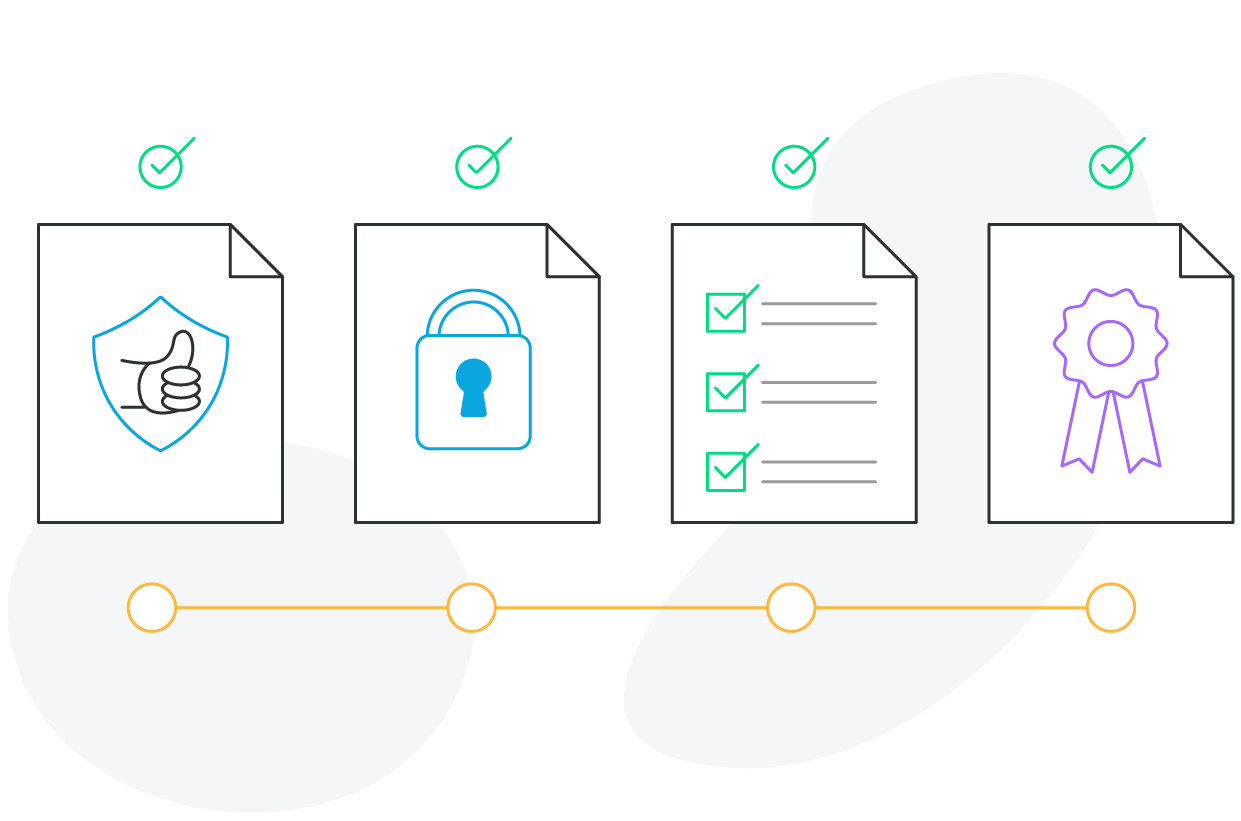
We engineer for both at once, so the evidence each one asks for comes out of the build.
An illustration of series of documents representing key security and design controls with accompanying checkmarks.

FDA PATHWAY

Design Controls Run Through Every Discipline

IEC 62304 and ISO 14971 govern how our firmware, mobile, and cloud engineers work, so requirements trace to tests, risk controls trace to design decisions, and the design history file reflects what was actually built. Section 524B cybersecurity documentation comes out of the same process.

Hospital Readiness

Hospital Requirements Enter the Architecture Early

MDS2 disclosure, HIPAA data handling, and EHR and PACS integration are design inputs when we architect the network and cloud layers.

The evidence clinical engineering and IT security ask for exists because the system was built to produce it.
An illustration of a bunch of decision input arrows all converging upon a single check mark.
Regulatory & Standards

Every requirement engineered into the architecture.

FDA Submission Pathways
510(k)
for Class II devices
De Novo
for novel low-to-moderate-risk devices
Premarket Approval (PMA)
for Class III devices
Investigational Device Exemption (IDE)
for clinical investigation of an unapproved device
FDA Cybersecurity (Section 524B)
Cybersecurity-by-Design 
as a premarket submission requirement under FDA's February 2026 final guidance
Secure Product Development Framework
for system-level threat modeling and architecture decisions
Secure Communication, OTA Updates, SBOM, and Vulnerability Management
at the connectivity and software level
Aligned with IEC 81001-5-1
Security across the health software lifecycle
Software, Safety & Quality Standards
IEC 62304
Medical Device Software Lifecycle
ISO 14971
Risk Management
21 CFR Part 820 / QMSR
Quality Management System Regulation
ISO 13485
Quality Management
IEC 60601-1
Basic Safety and Essential Performance
Design History File (DHF)
and Design Input/Output Documentation
Wireless & Market Certifications
FCC Part 15
for BLE and Wi-Fi
Bluetooth SIG Qualification (QDID)
IEC 60601-1-2 EMC
for Wireless Medical Devices
CE, UKCA, and TGA
International Certifications
ANSI C63.27
Wireless Coexistence
Hospital Integration & Review
HL7 v2
Clinical messaging with hospital information systems
FHIR
EHR data exchange
DICOM
Imaging system integration
MDS2
Manufacturer disclosure for hospital security review
Data Privacy & Security
These frameworks govern patient data at the organization level. We engineer the device and system architecture to support them.
HIPAA
Patient Data Privacy
HITRUST and SOC 2
Compliance Frameworks
NIST Cybersecurity Framework
for Healthcare Applications

Clinical Domains

We've Built Connected In-Clinic Systems Across the Clinical Landscape.

That landscape runs from procedural devices in the cath lab to the treatment, programming, and fitting systems clinicians use in the clinic. Every domain below is grounded in delivered programs.

Neurology Icon
Neurology

Implant Programming Systems

Clinician programmers and in-clinic configuration for implanted neuromodulation, sleep apnea therapy, and brain-computer interfaces.
Audiology Icon
Audiology

Cochlear Implant Fitting Systems

Fitting hub connectivity and clinician workflows for a fully implanted cochlear implant.
Cardiology Icon
Cardiology

Cath Lab & Cardiac Assessment Systems

Contrast dose monitoring in the cath lab and non-invasive cardiac performance assessment.
Dermatology Icon
Dermatology

Connected Clinical Treatment Devices

Docking, firmware management, and device health tracking for microneedling treatment in clinical practice.
Pulmonology Icon
Pulmonology

Respiratory Therapy Devices

Pediatric CPAP and ventilator platforms for clinical respiratory care.
Orthopedics Icon
Orthopedics

Surgical Setup & Fitting Systems

In-clinic setup and fitting workflows for orthopedic therapy devices.
Urology Icon
Urology

Neuromodulation Clinical Systems

Clinician-facing workflow support for pelvic neuromodulation therapy.
Radiology & Imaging Icon
Radiology & Imaging

Contrast Injection Systems

Injection control and hospital system integration for CT and MRI imaging workflows.
Program Highlights

In-Clinic Programs We've Been Trusted With.

We’re drawn to the hard problems, and these are a few of the complex connected in-clinic systems we’ve helped build.

Programs •
5

DermapenWorld’s Dp4™ microneedling pens are used in clinics around the world, all kept current through a companion app.

The Dp DOCK™ is where a pen sits between treatments. It syncs the pen to the app, installs firmware updates, watches its battery, and will not let it be stored with a needle cartridge attached.

For a practitioner, that means a pen that is current and ready for the next treatment without anyone thinking about it. It also means a dock that has to work with every version of the pen and app in the field, in a clinic where it will never get a second look.

Connected Clinical Device
Dermatology
Microneedling
Post-Market
IEC 60601
Electronics
Embedded Software
BLE
Legacy Device Support
Manufacturing Support
OTA Updates
PCB Design
RF & Antenna Design
Wi-Fi
Wireless Power Transfer
Highlight Cover Dermapen

One in four angiography patients has chronic kidney disease, and the contrast dye that makes the procedure possible is hard on the kidneys.

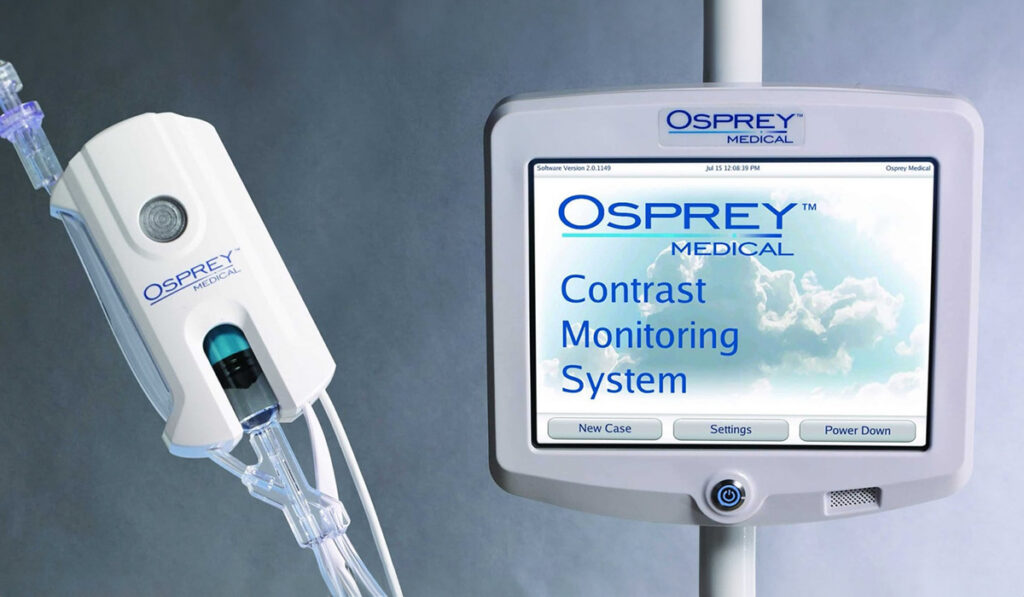
Osprey Medical’s FDA-cleared DyeVert™ PLUS diverts part of the dye before it reaches the patient, cutting the amount delivered by about 40 percent with no loss of image quality, and tracks each patient’s cumulative dose against their kidney function in real time.

For those patients, that means a heart procedure with less risk of kidney injury. It also means a tablet talking wirelessly to bedside devices inside a cath lab, one of the noisiest radio environments in a hospital, where nothing can drop mid-procedure.

Connected Clinical Device
Cardiology
Monitoring
Post-Market
FDA Class II
FDA 510(k) Cleared
IEC 60601
IEC 62304
Electronics
Mobile Apps
Systems
Web Apps & Backends
BLE
Embedded GUI
Embedded Linux
Manufacturing Support
Mobile Device Management
Native iPadOS
OTA Updates
Qt
Remote Device Management
RF & Antenna Design
Highlight Cover Osprey

Knowing how well a failing heart is pumping usually takes an echocardiogram and a trained operator, or a catheter threaded into the heart.

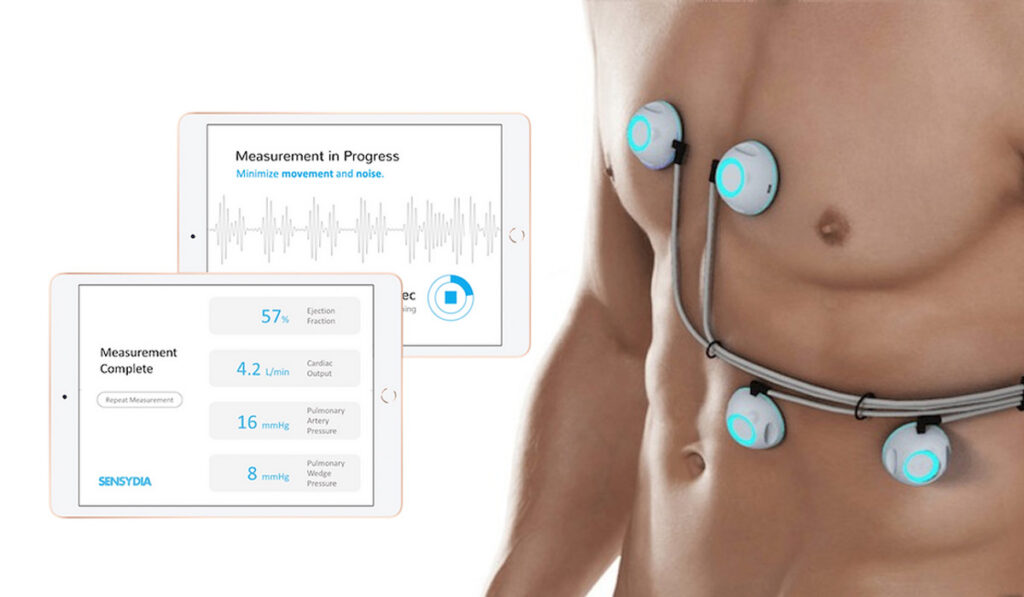
Sensydia’s Cardiac Performance System reads ejection fraction, cardiac output, and pulmonary artery pressure from disposable sensors on the chest, in minutes, at the bedside. Its ejection fraction measurement was first FDA-cleared in 2018, and the full platform holds Breakthrough Device Designation.

For a patient in an ICU or emergency department, that means answers without a referral or a procedure. It also means one measurement running across sensors, a gateway, a tablet, and the cloud, carrying patient data the whole way, while the platform is still being proven in clinical studies.
Connected Clinical Device
Cardiology
Diagnostics
Clinical Trials
FDA Class II
HIPAA
IEC 62304 Class B
Mobile Apps
Security
Web Apps & Backends
AWS
Backend API
BLE
Clinician Portal
Edge Gateway
Embedded Linux
Native iPadOS
Secure Authentication
Threat Modeling
Highlight Cover Sensydia
Select Programs •
3
DermapenWorld
Highlight Cover Dermapen

A Connected Docking Station for Clinical Microneedling Devices

DermapenWorld’s Dp4™ microneedling pens are used in clinics around the world, all kept current through a companion app.

The Dp DOCK™ is where a pen sits between treatments. It syncs the pen to the app, installs firmware updates, watches its battery, and will not let it be stored with a needle cartridge attached.

For a practitioner, that means a pen that is current and ready for the next treatment without anyone thinking about it. It also means a dock that has to work with every version of the pen and app in the field, in a clinic where it will never get a second look.

Connected Clinical Device
Dermatology
Microneedling
Post-Market
IEC 60601
Electronics
Embedded Software
BLE
Legacy Device Support
Manufacturing Support
OTA Updates
PCB Design
RF & Antenna Design
Wi-Fi
Wireless Power Transfer
Osprey Medical
Highlight Cover Osprey

Next-Generation Remote Management for a Cath Lab Device System

One in four angiography patients has chronic kidney disease, and the contrast dye that makes the procedure possible is hard on the kidneys.

Osprey Medical’s FDA-cleared DyeVert™ PLUS diverts part of the dye before it reaches the patient, cutting the amount delivered by about 40 percent with no loss of image quality, and tracks each patient’s cumulative dose against their kidney function in real time.

For those patients, that means a heart procedure with less risk of kidney injury. It also means a tablet talking wirelessly to bedside devices inside a cath lab, one of the noisiest radio environments in a hospital, where nothing can drop mid-procedure.

Connected Clinical Device
Cardiology
Monitoring
Post-Market
FDA Class II
FDA 510(k) Cleared
IEC 60601
IEC 62304
Electronics
Mobile Apps
Systems
Web Apps & Backends
BLE
Embedded GUI
Embedded Linux
Manufacturing Support
Mobile Device Management
Native iPadOS
OTA Updates
Qt
Remote Device Management
RF & Antenna Design
Sensydia
Highlight Cover Sensydia

A Non-Invasive Cardiac Assessment Platform for Clinical Studies

Knowing how well a failing heart is pumping usually takes an echocardiogram and a trained operator, or a catheter threaded into the heart.

Sensydia’s Cardiac Performance System reads ejection fraction, cardiac output, and pulmonary artery pressure from disposable sensors on the chest, in minutes, at the bedside. Its ejection fraction measurement was first FDA-cleared in 2018, and the full platform holds Breakthrough Device Designation.

For a patient in an ICU or emergency department, that means answers without a referral or a procedure. It also means one measurement running across sensors, a gateway, a tablet, and the cloud, carrying patient data the whole way, while the platform is still being proven in clinical studies.

Connected Clinical Device
Cardiology
Diagnostics
Clinical Trials
FDA Class II
HIPAA
IEC 62304 Class B
Mobile Apps
Security
Web Apps & Backends
AWS
Backend API
BLE
Clinician Portal
Edge Gateway
Embedded Linux
Native iPadOS
Secure Authentication
Threat Modeling
Would you like to see additional programs?
Device-to-Cloud Capabilities

Connected Medical Systems, Engineered As One.
Punch Through can own every discipline, so each is built for the way the others behave inside one program. Explore our capabilities across the disciplines.

Talk to the Team That's Built for the Hospital.

Wherever your connected in-clinic program is right now, this is the place to start.
Two people with a speaking bubble above them and one giving the thumbs up.
Calendar with phone notification icon
01
Quick Discovery Call
Share what you're building, timelines, and constraints. We'll confirm fit and the next best step.
Two people discussing with positive expressions
02
Team Consultation
We dig deeper into technical challenges, needs, and where we can add the most value.
Rocket launching with checklists background
03
Scope & Kickoff
We align on milestones, documentation, and delivery. Then we get moving and keep you informed.
Start a Conversation
Happy to sign an NDA before we get into specifics. We reply within 1-2 business days.

Contact Us

How can we help?

Share a few details about your project or challenge. We’ll confirm fit and the next best step within a couple of business days. NDA available.

Person fotoJason SheardTina Hanley
An outline of a bird flying with circuits come out of it.
Name