Bluetooth Low Energy
BLE Design & Engineering For Connected Medical Devices
We develop BLE for products where the wireless decision shapes everything around it, from the security model to the regulatory record.
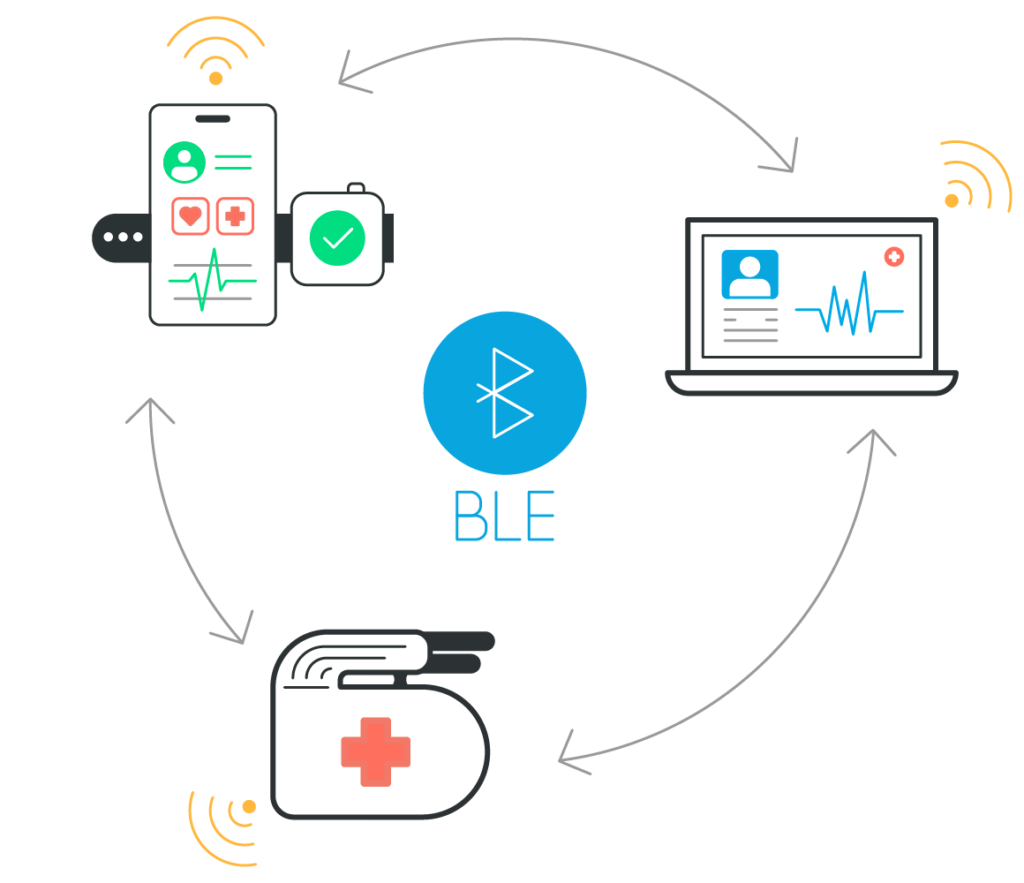
A BLE Connected System, Engineered As One.






Where BLE gets hard
Decisions To Get Right, Failures To Resolve.
Get the early calls wrong and the failure surfaces layers away.

Connectivity Strategy
- No clear answer on whether the device needs BLE, Wi-Fi, cellular, or a mix.
- Connectivity works for the patient but not for the clinicians, service techs, and manufacturing line that also touch the device.
- FDA security expectations are known, but there’s no plan to meet them.
- Phone replacement, offline use, and device swaps never factored into the connectivity decision.
- Hardware and protocol decisions are locking in before the connectivity strategy is settled.

Feasibililty & Risk
- Devices pair but fail to reconnect securely after bonding
- OTA firmware updates break existing bonds
- Security behavior differs between iOS and Android
- Authentication or encryption gaps flagged in compliance review
- Bonding edge cases that only surface in production

Security & Bonding
- GATT changes break app compatibility or force coordinated releases
- Firmware and app state drift out of sync during edge cases
- Protocol architecture limits the ability to add features
- A layer designed for a prototype hasn’t scaled with the product
- Application logic baked into GATT causes characteristic bloat

Protocol Architecture
- GATT changes break app compatibility or force coordinated releases
- Firmware and app state drift out of sync during edge cases
- Protocol architecture limits the ability to add features
- A layer designed for a prototype hasn’t scaled with the product
- Application logic baked into GATT causes characteristic bloat

Throughput & Performance
- Data transfer is slow or inconsistent
- Performance degrades as more devices connect
- UI feels laggy during BLE communication
- Background processing on mobile stalls data flow
- Power and performance goals are in tension

Connection Reliability
- Reconnection behaves differently across phone models and OS versions
- Idle disconnects with no clear cause
- Connections degrade when multiple devices are active at once
- Timing conflicts between BLE and other wireless radios
- Drops under load or in noisy RF environments

Cross-Platform Debugging
- Bugs appear only in production or on specific devices
- Behavior shifts with timing, state, or OS version
- Teams disagree on where the bug lives because it spans layers
- Failures tied to OS updates with undocumented BLE changes
- Test coverage misses the cross-layer interactions where failures occur
Where BLE gets hard
Decisions to Get Right, Failures to Resolve.
Get the early calls wrong and the failure surfaces layers away.

Connectivity Strategy
- No clear answer on whether the device needs BLE, Wi-Fi, cellular, or a mix.
- Connectivity works for the patient but not for the clinicians, service techs, and manufacturing line that also touch the device.
- FDA security expectations are known, but there’s no plan to meet them.
- Phone replacement, offline use, and device swaps never factored into the connectivity decision.
- Hardware and protocol decisions are locking in before the connectivity strategy is settled.

Feasibility & Risk
- BLE isn’t proven against range, latency, and power budgets in the real RF environment
- Device-to-cloud reliability is unproven against real-time and security demands
- The wireless approach may not fit the power, size, and cost envelope
- The architecture hasn’t been validated before full development commits
- The concept needs proving before major capital goes in

Security & Bonding
- Devices pair but fail to reconnect securely after bonding
- OTA firmware updates break existing bonds
- Security behavior differs between iOS and Android
- Authentication or encryption gaps flagged in compliance review
- Bonding edge cases that only surface in production

Protocol Architecture
- GATT changes break app compatibility or force coordinated releases
- Firmware and app state drift out of sync during edge cases
- Protocol architecture limits the ability to add features
- A layer designed for a prototype hasn’t scaled with the product
- Application logic baked into GATT causes characteristic bloat

Throughput & Performance
- Data transfer is slow or inconsistent
- Performance degrades as more devices connect
- UI feels laggy during BLE communication
- Background processing on mobile stalls data flow
- Power and performance goals are in tension

Connection Reliability
- Reconnection behaves differently across phone models and OS versions
- Idle disconnects with no clear cause
- Connections degrade when multiple devices are active at once
- Timing conflicts between BLE and other wireless radios
- Drops under load or in noisy RF environments

Cross-Platform Debugging
- Bugs appear only in production or on specific devices
- Behavior shifts with timing, state, or OS version
- Teams disagree on where the bug lives because it spans layers
- Failures tied to OS updates with undocumented BLE changes
- Test coverage misses the cross-layer interactions where failures occur
OUR APPROACH
We Engineer BLE as a System Problem.
How we think about BLE shapes everything we engineer for it.
The Problem
BLE gets handed off as connectivity. You own what it touches.
BLE looks like a connectivity problem, so it gets handed to whoever owns connectivity. The specialist delivers working Bluetooth and moves on. The architecture is set before anyone asks what the mobile app, the cloud, or FDA clearance will demand of it, and the failures that follow trace back to decisions no one revisited.

How We Engineer It
So we design it with the whole system in view.
A GATT structure shapes what the mobile app can do. A connection interval shapes battery life. A bonding flow shapes the security posture a regulator will review. We make those calls with the firmware, mobile, cloud, and security layers already in view, because the same engineers build those layers too.
What this looks like in practice:
- Connection parameters tuned against the device’s real clinical and RF environment, not the bench
- Bonding and pairing flows that survive firmware updates and OS changes across iOS and Android
- GATT architecture that absorbs new features without breaking app compatibility
- Wireless security documented for FDA review as the work happens, not assembled after
- Cross-layer bugs traced to their actual root cause instead of handed between teams
The Results
The wireless behavior you ship is the behavior you engineered.
The connectivity layer stops being the place problems hide. BLE decisions hold up because they were made with the whole system in view, and the wireless behavior your device ships with is the behavior you engineered, not the behavior you inherited.
Why teams trust us
The Track-Record Behind Our Engineering.
Earned in programs and tools where the work has to hold up.
Connectivity Depth
Fifteen years building at the BLE protocol level.
Our BLE expertise started with the protocol’s earliest commercial adoption. We built one of the first BLE products to connect to the iPhone 4s, the first smartphone to ship with Bluetooth Low Energy. Hundreds of connected device programs have followed.
We engineer across BLE, Wi-Fi, and cellular, and we understand how protocol-level decisions propagate through firmware, mobile, cloud, and security.
That depth is why we solve problems that teams working at a single layer can’t isolate.


Proven where it counts
BLE in production medical devices, cleared and shipping.
BLE runs in Class III implantables, active therapy systems, and point-of-care diagnostics deployed in the field today.
We engineer to meet FDA and IEC 62304 requirements from the first connection parameter, with traceability, risk control, and documentation generated as the work happens.
That’s why the wireless we deliver comes with the documentation FDA review demands, generated at the system level where connectivity decisions get scrutinized.
COMMUNITY TRUSTED
We built the tool BLE engineers rely on every day.
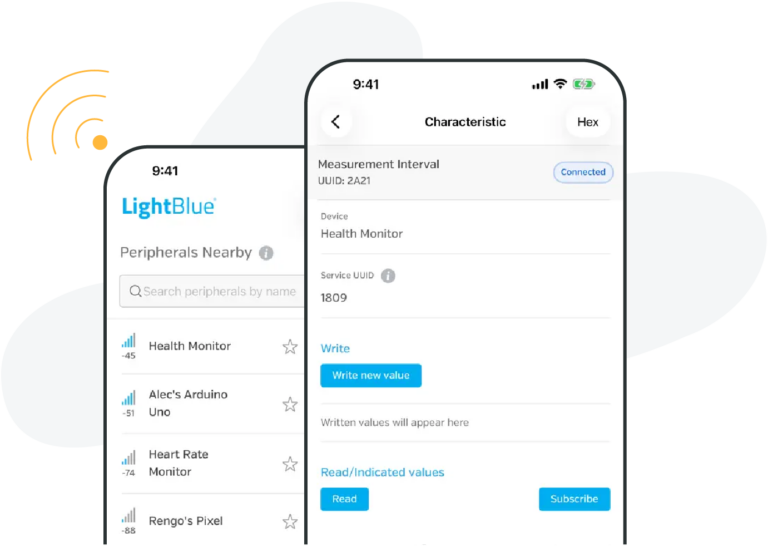
LightBlue, our BLE inspection and debugging app, is used by over 125,000 engineers every month to scan, connect, simulate, and debug devices across iOS, Android, and macOS. We built it for our own engineering needs. It reflects the same protocol-aware, hands-on approach we bring to every BLE engagement.
BLE Connected Products We’ve Delivered On
Here are a few of the products we’ve supported with Bluetooth Low Energy architecture, troubleshooting, and full-system integration.

The World’s First Smartphone Breathalyzer
BACtrack was the first company the FDA allowed to market breathalyzers for consumer use, and in 2013 it released the world’s first smartphone breathalyzer.
BACtrack Mobile pairs with a phone over Bluetooth, turning a breath sample into a blood alcohol estimate on the screen in the person’s hand.
That means anyone can know their number before making a decision that depends on it. It also means an accuracy people stake real decisions on has to survive a wireless link to whatever phone they happen to carry.


Reliable Device Connectivity for a Care-at-Home Platform
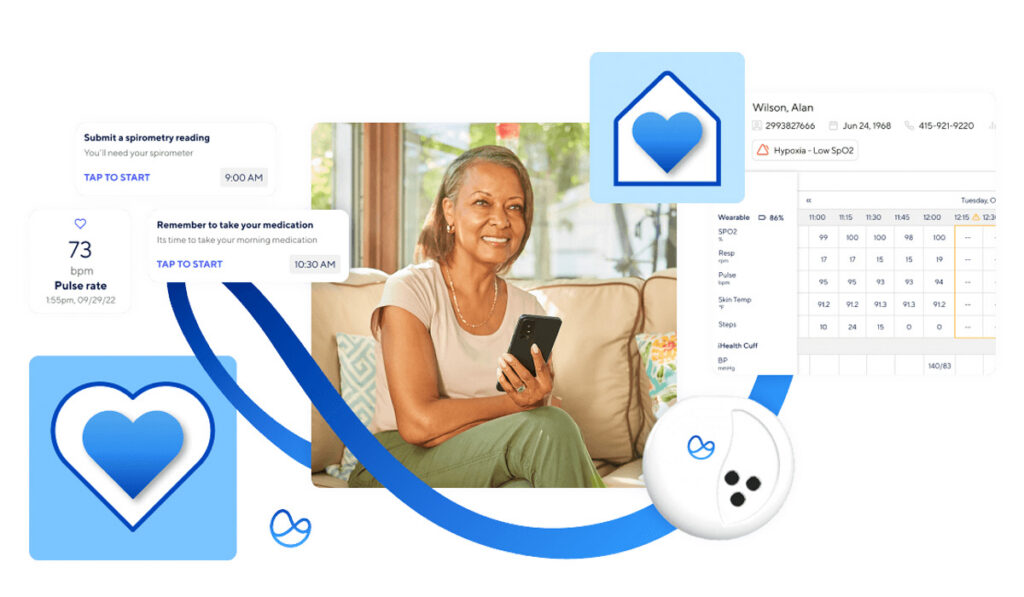
Current Health builds the platform hospitals use to care for patients at home instead of in a bed.
A patient goes home with a wearable and a kit of connected devices, and their vital signs and readings flow to a clinician’s dashboard, with telehealth on top.
For a patient, that means recovering in their own bed with someone still watching. It also means hospital-grade monitoring riding on consumer Bluetooth, in homes no one controls, across medical and consumer devices from different makers that each behave differently.

A Connected Docking Station for Clinical Microneedling Devices
DermapenWorld’s Dp4™ microneedling pens are used in clinics around the world, all kept current through a companion app.
The Dp DOCK™ is where a pen sits between treatments. It syncs the pen to the app, installs firmware updates, watches its battery, and will not let it be stored with a needle cartridge attached.
For a practitioner, that means a pen that is current and ready for the next treatment without anyone thinking about it. It also means a dock that has to work with every version of the pen and app in the field, in a clinic where it will never get a second look.


A Sound Amplifier Its Wearer Tunes From Their Own Phone
Ear Technology Corporation designs Tweak hearing products with audiologist Dr. Daniel R. Schumaier, drawing on 50 years of clinical practice.
TweakConnect pairs a Tweak sound amplifier with a smartphone app where the wearer picks an amplification profile, fine-tunes it, and switches programs as their surroundings change.
That means the wearer decides what sounds right, in the room where it matters. It also means a Bluetooth connection that has to work with whatever phone the wearer happens to own, from flagships to budget Android handsets that each handle Bluetooth their own way.


The World's First Completely Internal Cochlear Implant
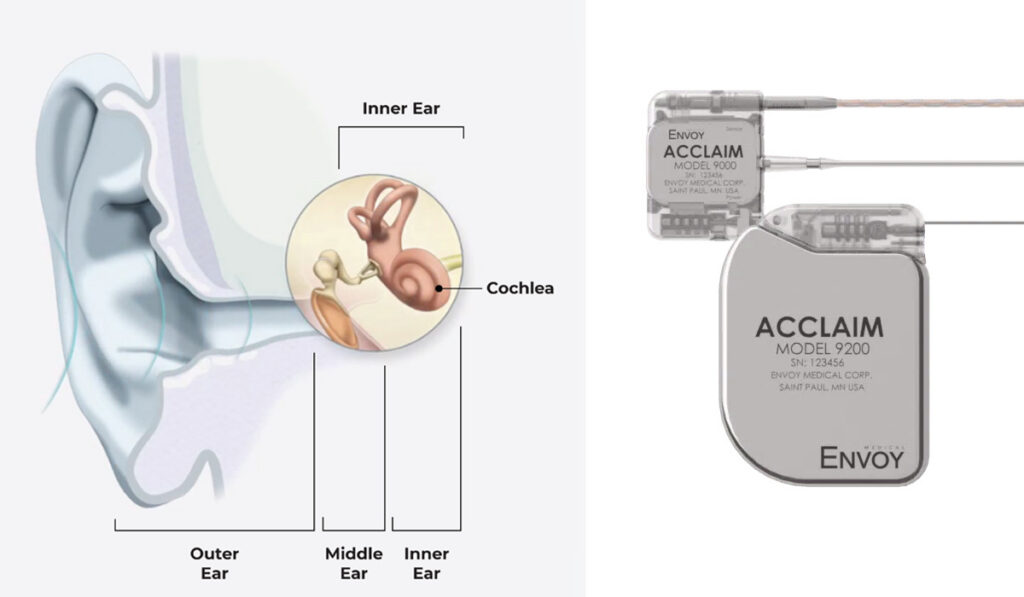
Envoy built the first FDA-approved hearing device that lives entirely inside the body.
The Acclaim™ Cochlear Implant is designed for severe hearing loss, with a sensor that uses the ear’s own anatomy to capture sound in place of an external microphone.
There is nothing to take off before sleeping or showering. There is also nothing easy to power, charge, or connect, and the parts other implants keep outside the head are sealed inside, out of reach without surgery.

A Coronary Pressure System, Secured for Its Next Generation
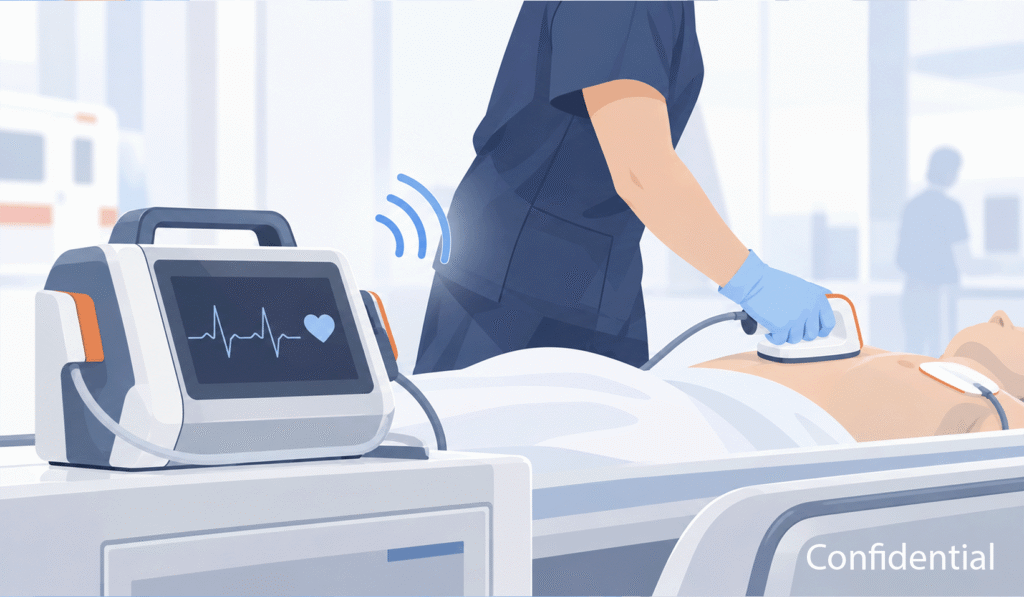
In cardiac arrest, survival depends on a defibrillator working the instant a care team reaches for it.
A global acute care company is building wireless connectivity into its next generation of defibrillators, with the security architecture to protect it.
For a care team, that means the data a defibrillator gathers can move with a patient, without a cable. It also means a wireless path into a device that delivers a shock, where security can never slow it down.

A Building Automation Concept Proven in the Real World in Weeks
A global building automation company is developing an automation platform for commercial buildings, one that controls and monitors dense fleets of connected devices across facilities shared by many tenants.
For a building operator, the aim is one system running the connected devices of an entire property. It also means radio working through metal enclosures and motor interference at extreme device density, and a security model that has to hold across every tenant, device, and door it touches.


A Coronary Pressure System, Secured for Its Next Generation
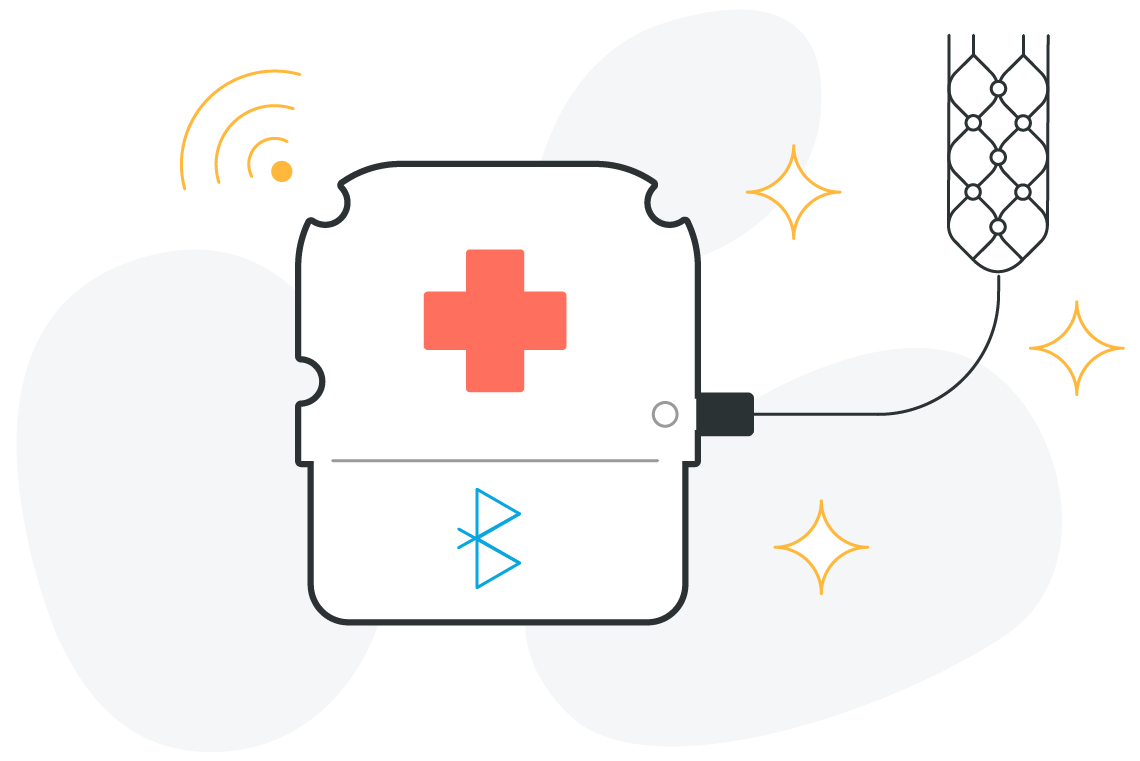
Whether a narrowed coronary artery gets a stent often comes down to a pressure reading taken across the blockage mid-procedure.
A global cardiovascular device company makes one of the systems that delivers it, in cath labs worldwide, and is bringing its wireless link and security to a new generation.
For the cardiologist, that means a stent decision based on how blood actually flows. It also means replacing the wireless link and its security on a system already in cath labs, while the measurement stays the same.

A Fashion Smartwatch Shipped by the Millions
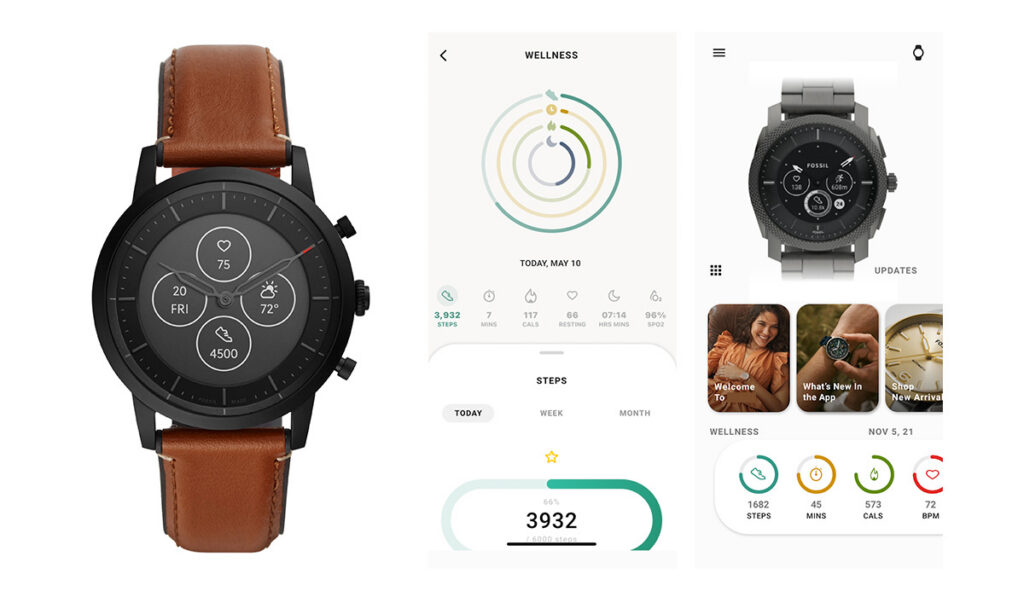
A global fashion brand’s smartwatches reached millions of wrists across several product generations, and they were designed to look like watches first.
Under the face they tracked health and activity, moved logs and firmware updates to a phone over Bluetooth, and ran on a battery sized for a fashion case.
For the wearer, that meant a watch chosen for how it looked that still did what a smartwatch does. It also meant pairing with every phone and OS version its wearers owned, each handling Bluetooth its own way, at a scale where a one-in-a-million quirk came up every day.

A Meditation Device Built to Survive Its First Five Minutes
Hyperice’s Core™ Meditation Trainer is a handheld device you cup in both palms, with heart sensors in the handles and a pulse you breathe along with.
It reads heart rate and heart rate variability to tell when you have settled into a focused state, and the app’s guided sessions respond to that.
For someone who wonders whether they are meditating right, that means a device that can tell them. It also means a consumer product whose first act out of the box is updating its own firmware over Bluetooth, in a living room, where a failed update is a returned product.


Sleep Apnea Therapy, Connected From Body to Cloud
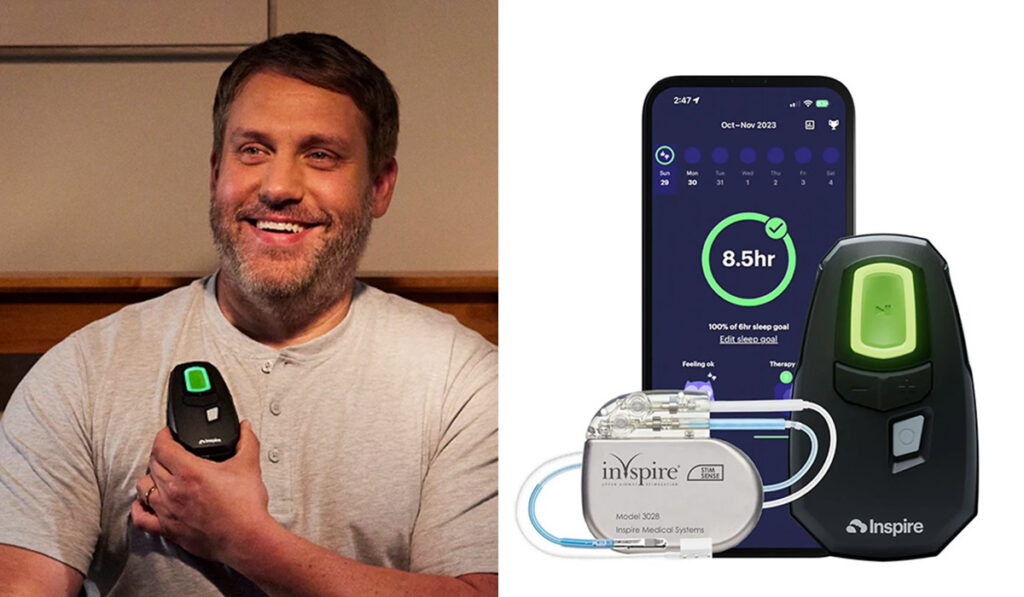
Inspire® is the first FDA-approved neurostimulation therapy for moderate to severe obstructive sleep apnea.
A small implant stimulates the nerve that controls the tongue in time with the patient’s breathing, and a connected system sits around it, with a Bluetooth remote the patient holds, an app, and a clinician web portal that monitors the implant wirelessly.
For someone who could never live with a mask, that means sleeping with nothing on their face and starting therapy with a click. It also means the system around a Class III implant has moved through several device generations while every implant already placed stays in a body for years, so no part of the system can change without accounting for every implant in the field.

A Health Tracker Built for a Four-Year-Old’s Wrist
Kiddo began at GoodParents as a wristband for children ages 4 to 10, built to give parents real-time insight into their child’s health and wellbeing.
The band reads temperature, perspiration, heart rate, and motion, and the parent app turns those readings into scores for health, activity, sleep, and emotional wellbeing.
That means a parent sees how their child is sleeping and coping, along with how active they are. It also means sensors on a small child’s wrist, worn through play and sleep, have to read steadily enough to become a score a parent can trust.


A Bone Growth Stimulator That Reports Every Treatment
Orthofix’s CervicalStim™ is the only bone growth therapy device approved by the FDA as a noninvasive, adjunctive treatment to improve cervical fusion outcomes in high-risk patients.
Its latest generation works with the STIM onTrack™ app, which reminds patients of each treatment and, in a first-to-market feature, gives physicians real-time data on whether they follow their prescription.
That means a patient healing from neck surgery gets help staying on schedule, and their physician sees adherence without waiting for a visit. It also means usage data from a Class III device worn at home has to reach the physician reliably, because it stands as the record of treatment.


Next-Generation Remote Management for a Cath Lab Device System
One in four angiography patients has chronic kidney disease, and the contrast dye that makes the procedure possible is hard on the kidneys.
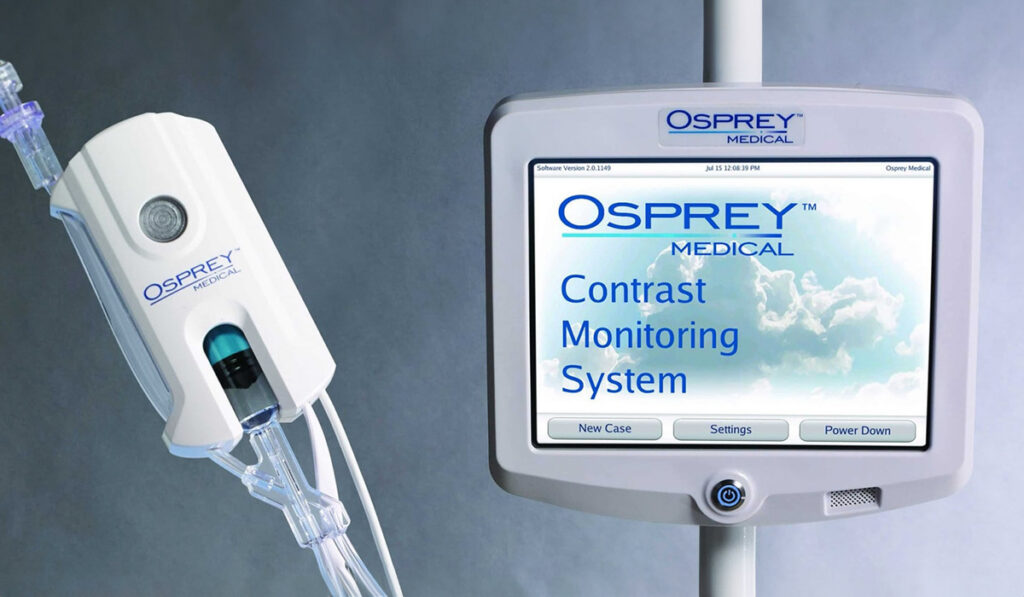
Osprey Medical’s FDA-cleared DyeVert™ PLUS diverts part of the dye before it reaches the patient, cutting the amount delivered by about 40 percent with no loss of image quality, and tracks each patient’s cumulative dose against their kidney function in real time.
For those patients, that means a heart procedure with less risk of kidney injury. It also means a tablet talking wirelessly to bedside devices inside a cath lab, one of the noisiest radio environments in a hospital, where nothing can drop mid-procedure.

A Pro-Level Radar Gun That Lives on the Coach’s Phone
Pocket Radar makes radar guns used everywhere from MLB coaching staffs to youth teams.
The Smart Coach Radar™ sends every reading over Bluetooth to the Pocket Radar app, which records video with the speed embedded in it, calls the number out loud, and tracks results over time.
That means an athlete sees which pitch or swing produced which number and builds a record of progress. It also means every reading has to reach the app, even when a coach is running ten radars across a few shared iPads at the same practice.


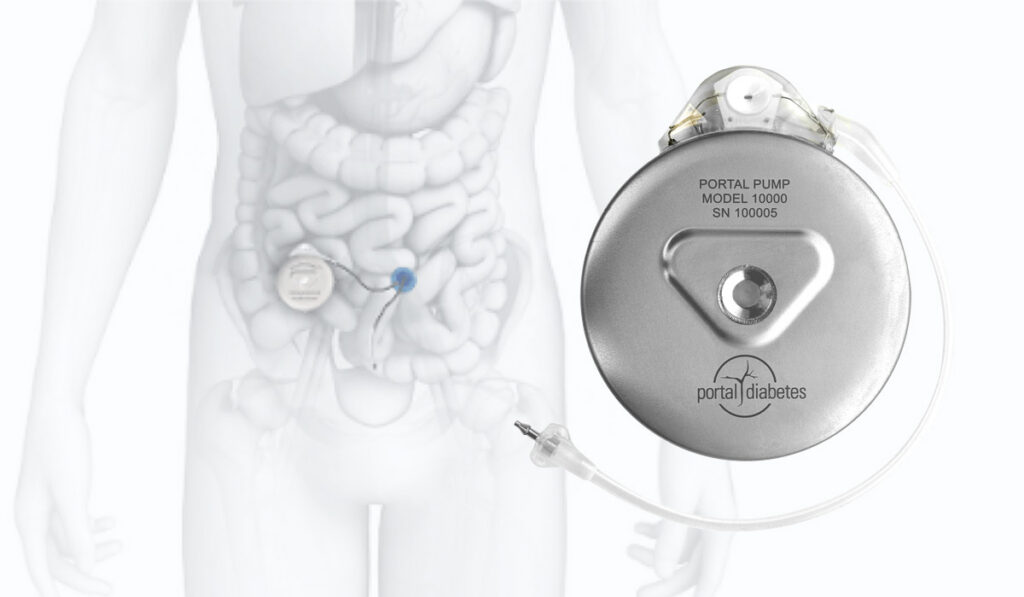
A Connected Care Platform Around an Implanted Insulin Pump
Portal Diabetes holds FDA Breakthrough Device designation for the Portal Pump™, an implantable insulin delivery system.
The pump is designed to sit in the abdomen, dose from a continuous glucose monitor with a heat-stable concentrated insulin, and take refills in a clinic after weeks or months.
For someone with type 1 diabetes, that means no carbohydrate counting, no meal announcements, and no waking in the night. It also means a loop that closes with no one in it, which has to be trusted before it is ever implanted and then stays in for five to seven years.

A Non-Invasive Cardiac Assessment Platform for Clinical Studies
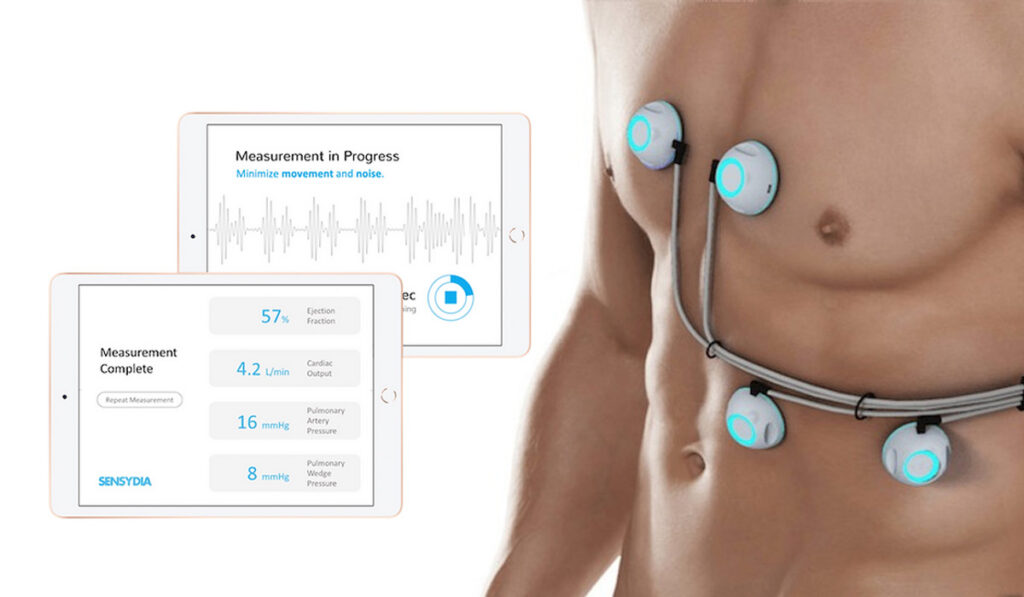
Knowing how well a failing heart is pumping usually takes an echocardiogram and a trained operator, or a catheter threaded into the heart.
Sensydia’s Cardiac Performance System reads ejection fraction, cardiac output, and pulmonary artery pressure from disposable sensors on the chest, in minutes, at the bedside. Its ejection fraction measurement was first FDA-cleared in 2018, and the full platform holds Breakthrough Device Designation.
For a patient in an ICU or emergency department, that means answers without a referral or a procedure. It also means one measurement running across sensors, a gateway, a tablet, and the cloud, carrying patient data the whole way, while the platform is still being proven in clinical studies.
An Implanted Therapy Its Clinicians Configure From Anywhere
A stealth-stage medical startup is developing an implanted neuromodulation therapy that its clinicians can adjust without the patient in the room.
For the patient, that means a therapy that changes when it needs to instead of at the next appointment.
It also means every adjustment travels from a clinician’s screen to a device inside someone’s body, and that path has to be trusted at Class III stakes before anything is implanted.


An Implant That Turns Thought Into Touchscreen Control
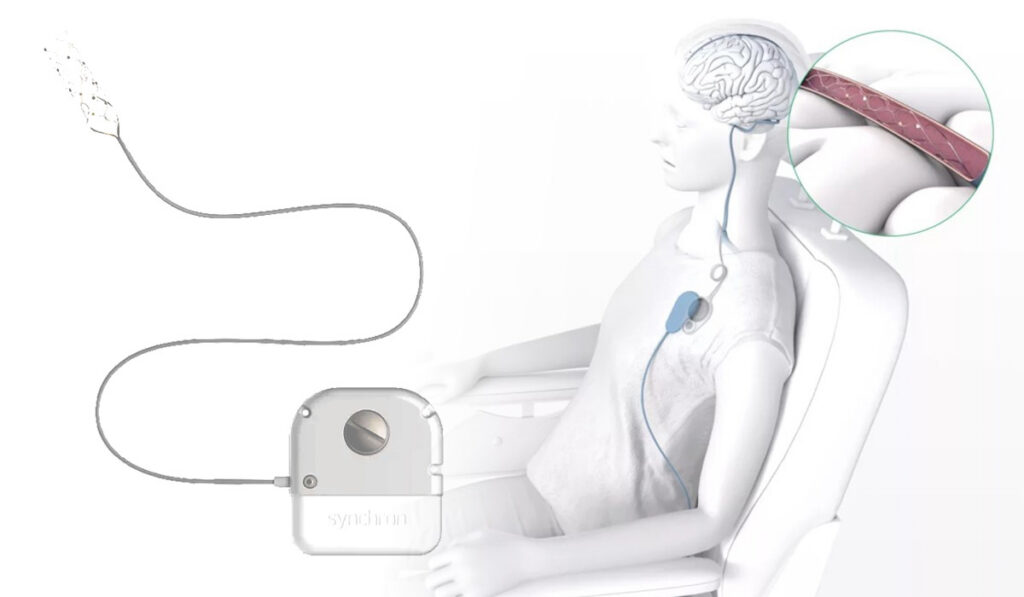
Synchron ran the first FDA-approved clinical trial of a permanently implanted brain-computer interface, and all six patients met the primary safety endpoint.
The Stentrode® is placed through a blood vessel, with no open brain surgery, and sits in a vein beside the motor cortex reading the intent to move.
For someone with severe paralysis, that means texting, browsing, and opening apps by thought alone. It also means the connection out of the body is the whole product, at Class III stakes. Nothing the implant does reaches a screen unless that link holds.

Wireless Injector Remote Control
In CT and MRI, the contrast injector sits beside the patient while the technologist runs the scan from a control room next door.
Control from that room is common, but it usually means running cable through the wall. A global radiology company asked whether wireless could replace it.
For an imaging department, that means installing an injector without new cable through the shielding. It also means a command that starts contrast flowing has to work in every facility, and the program had to show where it could.

The World’s First Smartphone Breathalyzer
Reliable Device Connectivity for a Care-at-Home Platform
A Connected Docking Station for Clinical Microneedling Devices
A Sound Amplifier Its Wearer Tunes From Their Own Phone
The World's First Completely Internal Cochlear Implant
A Coronary Pressure System, Secured for Its Next Generation
The World’s First Smartphone Breathalyzer
BACtrack was the first company the FDA allowed to market breathalyzers for consumer use, and in 2013 it released the world’s first smartphone breathalyzer.
BACtrack Mobile pairs with a phone over Bluetooth, turning a breath sample into a blood alcohol estimate on the screen in the person’s hand.
That means anyone can know their number before making a decision that depends on it. It also means an accuracy people stake real decisions on has to survive a wireless link to whatever phone they happen to carry.
Reliable Device Connectivity for a Care-at-Home Platform
Current Health builds the platform hospitals use to care for patients at home instead of in a bed.
A patient goes home with a wearable and a kit of connected devices, and their vital signs and readings flow to a clinician’s dashboard, with telehealth on top.
For a patient, that means recovering in their own bed with someone still watching. It also means hospital-grade monitoring riding on consumer Bluetooth, in homes no one controls, across medical and consumer devices from different makers that each behave differently.
A Connected Docking Station for Clinical Microneedling Devices
DermapenWorld’s Dp4™ microneedling pens are used in clinics around the world, all kept current through a companion app.
The Dp DOCK™ is where a pen sits between treatments. It syncs the pen to the app, installs firmware updates, watches its battery, and will not let it be stored with a needle cartridge attached.
For a practitioner, that means a pen that is current and ready for the next treatment without anyone thinking about it. It also means a dock that has to work with every version of the pen and app in the field, in a clinic where it will never get a second look.
A Sound Amplifier Its Wearer Tunes From Their Own Phone
Ear Technology Corporation designs Tweak hearing products with audiologist Dr. Daniel R. Schumaier, drawing on 50 years of clinical practice.
TweakConnect pairs a Tweak sound amplifier with a smartphone app where the wearer picks an amplification profile, fine-tunes it, and switches programs as their surroundings change.
That means the wearer decides what sounds right, in the room where it matters. It also means a Bluetooth connection that has to work with whatever phone the wearer happens to own, from flagships to budget Android handsets that each handle Bluetooth their own way.
The World's First Completely Internal Cochlear Implant
Envoy built the first FDA-approved hearing device that lives entirely inside the body.
The Acclaim™ Cochlear Implant is designed for severe hearing loss, with a sensor that uses the ear’s own anatomy to capture sound in place of an external microphone.
There is nothing to take off before sleeping or showering. There is also nothing easy to power, charge, or connect, and the parts other implants keep outside the head are sealed inside, out of reach without surgery.
A Coronary Pressure System, Secured for Its Next Generation
In cardiac arrest, survival depends on a defibrillator working the instant a care team reaches for it.
A global acute care company is building wireless connectivity into its next generation of defibrillators, with the security architecture to protect it.
For a care team, that means the data a defibrillator gathers can move with a patient, without a cable. It also means a wireless path into a device that delivers a shock, where security can never slow it down.
GO DEEPER ON BLE
The BLE References Our Own Engineers Reach For.
These are the in-depth guides our engineers use to make connectivity, security, and architecture decisions on real programs.
BLE Connectivity Architecture: The Ultimate Guide
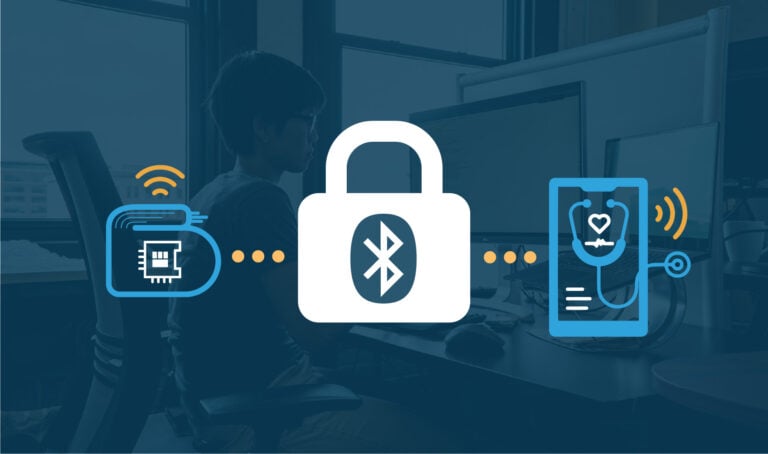
BLE Security: Where to Begin When Creating a Connected System
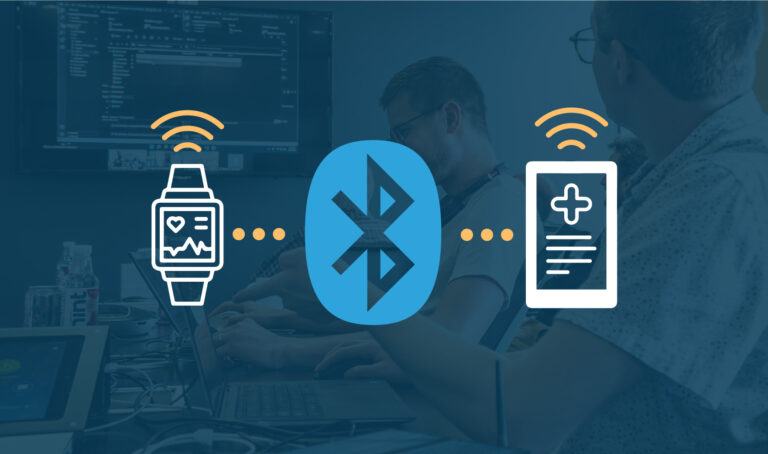
The Ultimate Guide to Managing Your BLE Connection
Ready to get started?

Quick Discovery Call

Team Consultation